
7 Amazing Secrets: Best Polish Pierogi Recipe
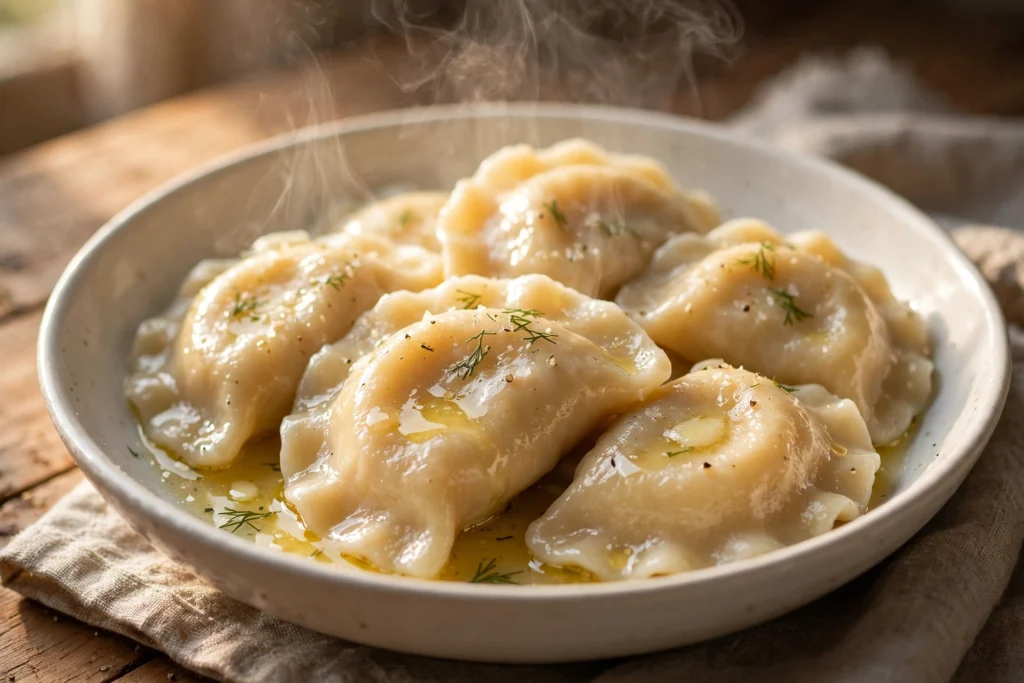
These homemade Polish pierogi feature tender dough wrapped around a creamy potato-and-cheese filling. Serve them boiled with melted butter or lightly pan-fried with caramelized onions and sour cream for an irresistible Polish comfort meal.
By Chef | Dazzling Recipe
- Preparation time: 60 minutes
- Cooking time: 20 minutes
- Resting time: 30 minutes
- Total time: 1 hour 50 minutes
- Yield: Approximately 36 pierogi
- Servings: 6
- Cuisine: Polish
- Course: Main course or side dish
What Are Pierogi?
Pierogi are traditional Polish filled dumplings made by wrapping thin circles of dough around savory or sweet fillings. The edges are carefully sealed before the dumplings are boiled and sometimes pan-fried in butter.
The singular form is pieróg, while pierogi is plural.
This recipe makes pierogi ruskie, one of Poland’s most popular varieties. Despite the name, they are not Russian pierogi. The traditional filling comes from the historic Ruthenian region and combines potatoes, twaróg cheese, onions, salt, and black pepper.
Why You’ll Love This Recipe
- Soft, homemade dumpling dough
- Creamy potato-and-cheese filling
- Made with simple ingredients
- Freezer-friendly
- Can be boiled or pan-fried
- Perfect for family meals and celebrations
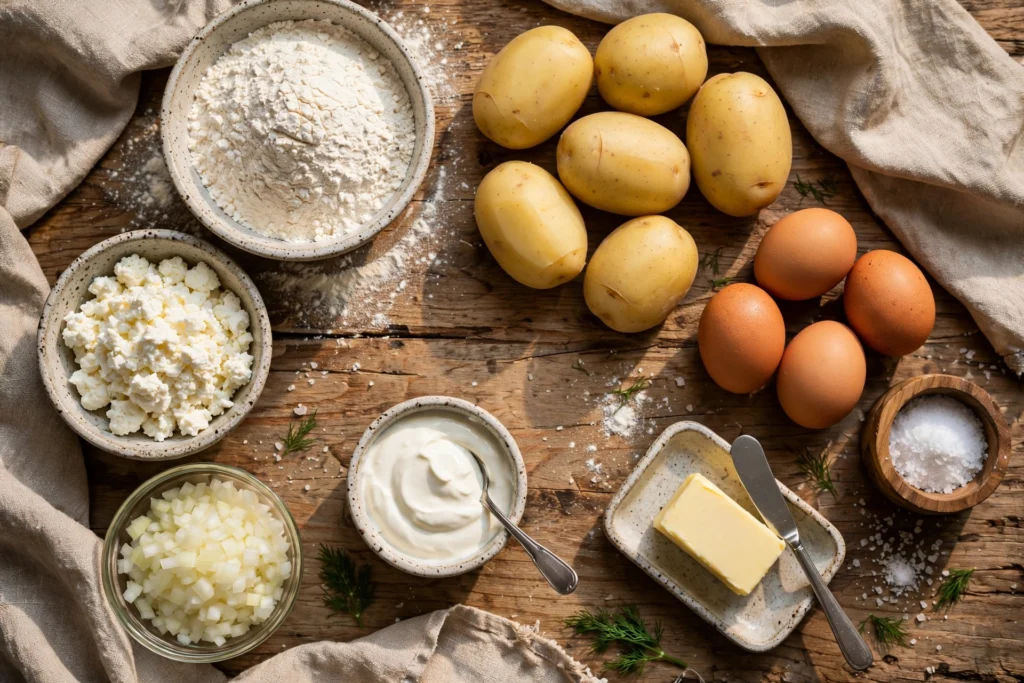
Ingredients
For the pierogi dough
- 3 cups (375 g) all-purpose flour
- 1 teaspoon fine salt
- 1 cup (240 ml) warm water
- 2 tablespoons neutral oil or melted butter
- Additional flour for rolling
For the potato-and-cheese filling
- 1½ pounds (700 g) starchy potatoes, peeled and quartered
- 8 ounces (225 g) Polish twaróg or farmer’s cheese
- 1 large yellow onion, finely chopped
- 2 tablespoons (28 g) butter
- 1 teaspoon salt, or to taste
- ½ teaspoon freshly ground black pepper
For cooking and serving
- Salted water
- 2 tablespoons butter
- Sour cream
- Chopped fresh chives, optional
- Caramelized onions
How to Make Homemade Polish Pierogi
1. Cook the potatoes
Place the peeled potatoes in a saucepan and cover them with cold, lightly salted water.
Bring to a boil and cook for 15–20 minutes, or until completely tender. Drain thoroughly and return the potatoes to the warm saucepan for one minute to remove excess moisture.
Mash the potatoes until smooth. Avoid adding milk or cream because the filling must remain firm enough to shape.
2. Caramelize the onion
Melt two tablespoons of butter in a frying pan over medium-low heat. Add the chopped onion and cook for approximately 12–15 minutes, stirring occasionally, until soft and golden.
Reserve half of the onions for serving.
3. Prepare the filling
Crumble the farmer’s cheese into the warm mashed potatoes. Add half of the caramelized onions, salt, and black pepper.
Mix until evenly combined. Taste and adjust the seasoning. Traditional pierogi filling should have a noticeable peppery flavor.
Allow the filling to cool completely before assembling the dumplings.
4. Make the dough
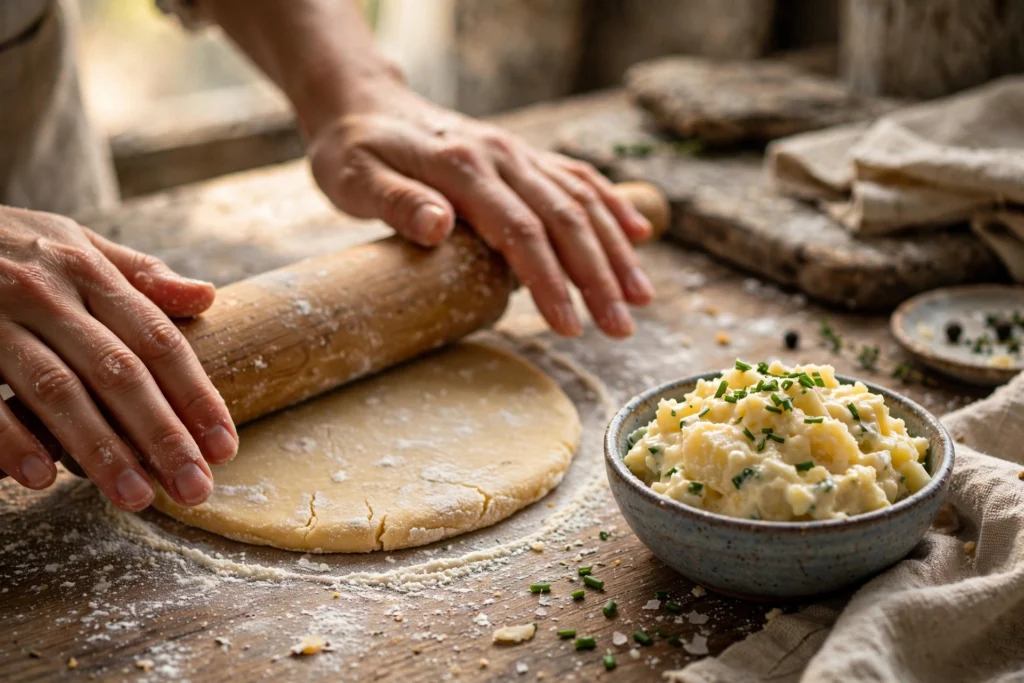
Combine the flour and salt in a large mixing bowl. Make a well in the center and add the warm water and oil.
Mix with a spoon until a rough dough forms. Transfer it to a lightly floured surface and knead for 7–8 minutes until smooth, soft, and elastic.
If the dough feels dry, add warm water one teaspoon at a time. If it is excessively sticky, dust it lightly with flour.
5. Rest the dough
Cover the dough with an overturned bowl or reusable wrap. Let it rest at room temperature for 30 minutes.
Resting relaxes the gluten, making the dough easier to roll without shrinking.
6. Roll and cut the dough
Divide the dough into two portions. Keep one portion covered while working with the other.
Roll the dough to approximately ⅛ inch or 2–3 millimeters thick. Cut circles using a 3-inch or 7.5-centimeter round cutter.
Gather the scraps, rest them briefly, and roll them again.
7. Fill the pierogi
Place approximately one tablespoon of filling in the center of each dough circle.
Fold the dough over the filling to create a half-moon shape. Press the edges firmly together, beginning at the center and moving toward both ends.
Make sure no filling touches the sealing edge. Trapped filling can prevent the dough from closing properly.
Place the finished pierogi on a lightly floured tray and cover them with a clean kitchen towel so they do not dry out.
8. Boil the pierogi
Bring a large pot of salted water to a gentle boil. Cook the pierogi in small batches so they have enough room to move.
Stir gently after adding them to prevent sticking. Once they float to the surface, cook for another 2–3 minutes.
Remove them with a slotted spoon and transfer them to a buttered plate.
9. Serve or pan-fry
Serve the boiled pierogi immediately with melted butter, caramelized onions, sour cream, and chives.
For crispy edges, melt butter in a skillet and fry the cooked pierogi for 2–3 minutes on each side, until lightly golden.
Chef ’s Tips for Perfect Pierogi
- Let the filling cool before assembling the dumplings.
- Use starchy potatoes for a fluffy, firm filling.
- Do not add milk to the mashed potatoes.
- Keep unused dough and assembled pierogi covered.
- Avoid overfilling, which can cause the seams to open.
- Remove any filling from the dough’s edges before sealing.
- Boil the pierogi gently rather than vigorously.
- Cook them in batches to prevent crowding.
- Season the filling generously before assembly.

What Can Replace Twaróg Cheese?
Polish twaróg has a slightly tangy flavor and crumbly texture. If it is unavailable, substitute:
- Farmer’s cheese
- Well-drained cottage cheese
- Quark
- A mixture of ricotta and crumbled feta
If using ricotta or cottage cheese, drain it thoroughly first. Excess moisture can make the filling difficult to shape.
Popular Pierogi Fillings
Once you master the dough, try other traditional and creative fillings:
Sauerkraut and mushroom
Combine cooked sauerkraut with finely chopped mushrooms and caramelized onions.
Meat
Use finely minced cooked beef or pork mixed with onions and seasoning.
Potato and cheddar
Replace twaróg with mature cheddar for a Polish-American variation.
Sweet cheese
Mix farmer’s cheese with sugar, vanilla, and egg yolk for dessert pierogi.
Blueberry
Fill the dumplings with fresh blueberries and sugar, then serve with sweetened sour cream.
What to Serve with Pierogi
Homemade pierogi pair especially well with:
- Sour cream
- Caramelized onions
- Melted butter
- Crispy bacon
- Kielbasa sausage
- Cucumber salad
- Braised red cabbage
- Mushroom sauce
- Beet soup or barszcz
Make-Ahead Instructions
The potato filling can be prepared one day ahead and refrigerated in a covered container.
The dough is best prepared shortly before assembly. However, shaped uncooked pierogi can be refrigerated for several hours when arranged in a single layer, lightly floured, and tightly covered.
How to Freeze Pierogi
Arrange uncooked pierogi in a single layer on a flour-dusted baking sheet. Make sure they do not touch.
Freeze until solid, approximately two hours, and then transfer them to an airtight freezer bag. Store for up to three months.
Cook frozen pierogi directly in boiling water without thawing. Add an extra one or two minutes to the cooking time.
Storage and Reheating
Refrigerate cooked pierogi in an airtight container for up to three days. Toss them with a small amount of butter or oil before storing to prevent sticking.
Reheat them in a buttered skillet over medium heat until hot and golden. They can also be reheated gently in simmering water, although skillet reheating provides better texture.
Frequently Asked Questions
Why is my pierogi dough tough?
The dough may contain too much flour, may not have rested long enough, or may have been overworked. It should feel soft and slightly tacky rather than dry.
Why did my pierogi open while boiling?
They may have been overfilled, poorly sealed, or cooked in water that was boiling too vigorously. Press the seams firmly and use a gentle boil.
Do pierogi dough recipes contain eggs?
Some recipes use eggs, but many traditional Polish versions rely on flour, warm water, salt, and oil or butter. Eggless dough is soft and easy to roll.
Can I pan-fry pierogi without boiling them?
Fresh pierogi should be boiled before frying. Boiling cooks the dough and filling evenly, while frying afterward creates a golden exterior.
Can I use leftover mashed potatoes?
Yes, provided the mashed potatoes are not overly soft or creamy. You may need to reduce other moist ingredients to keep the filling firm.
Final Thoughts
Making Polish pierogi at home requires a little time, but the process is simple and rewarding. The tender dough, creamy potato filling, buttery onions, and cool sour cream create a deeply comforting meal that is perfect for sharing.
Prepare a double batch and freeze half—you will have homemade pierogi ready whenever you need an easy Polish-inspired dinner.
SEO Information
SEO title: Homemade Polish Pierogi Recipe – Potato and Cheese Dumplings
Meta description: Make authentic homemade Polish pierogi with tender dough and creamy potato-and-cheese filling, served with butter, onions, and sour cream.
URL slug: homemade-polish-pierogi-recipe
Focus keyphrase: homemade Polish pierogi
Secondary keywords: pierogi recipe, pierogi ruskie, Polish dumplings, potato and cheese pierogi, homemade dumplings
Image filename: homemade-polish-pierogi-recipe-hero.png
Image alt text: Homemade Polish pierogi with golden butter, caramelized onions, sour cream, and fresh chives.