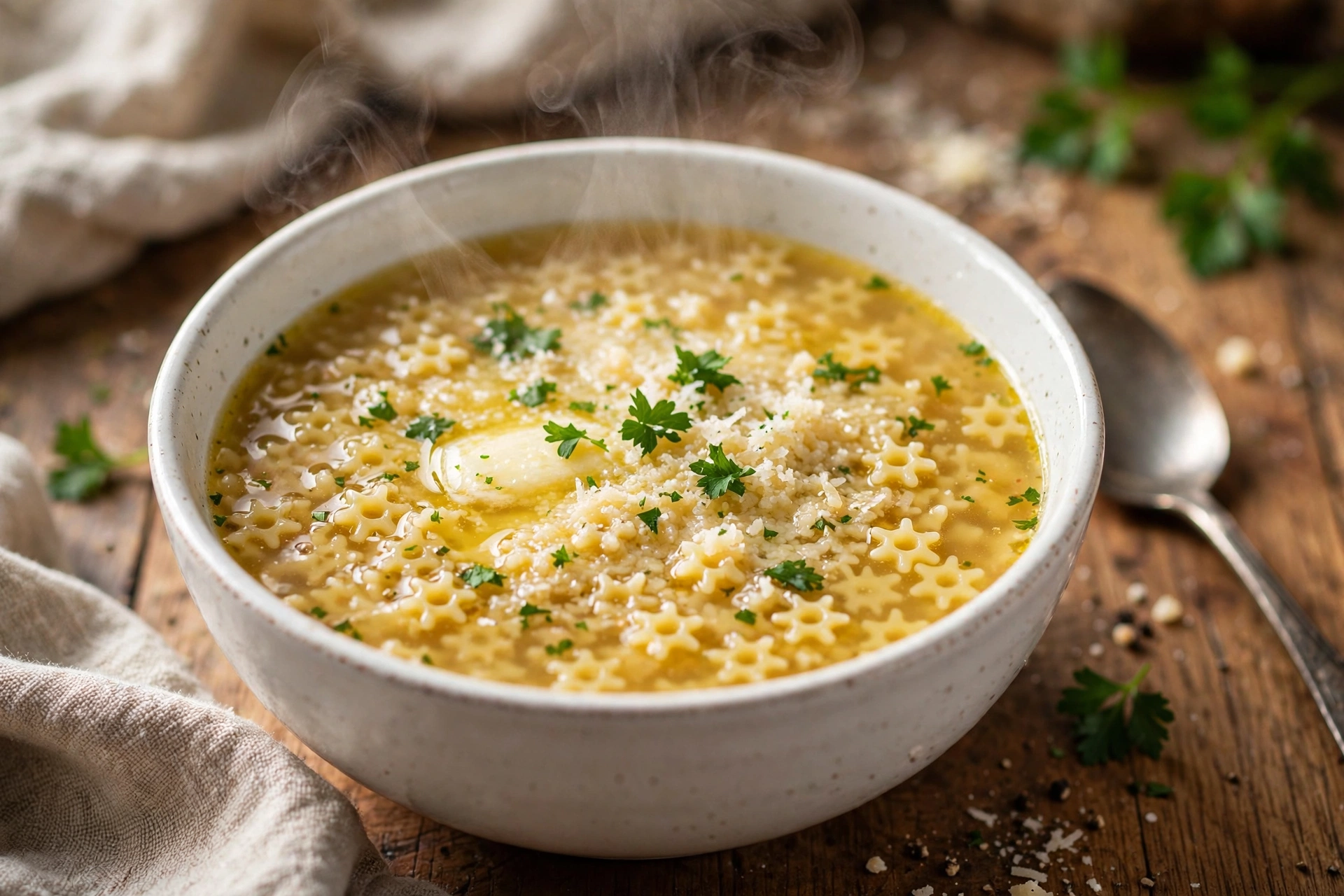
How I Can Make Italian Pastina Soup Recipe
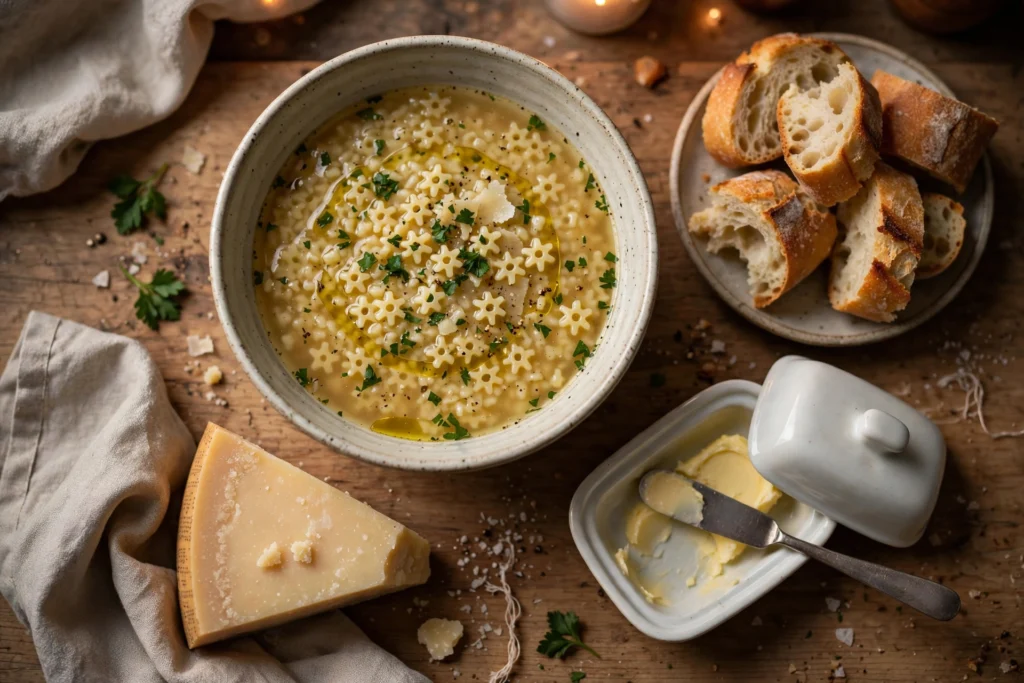
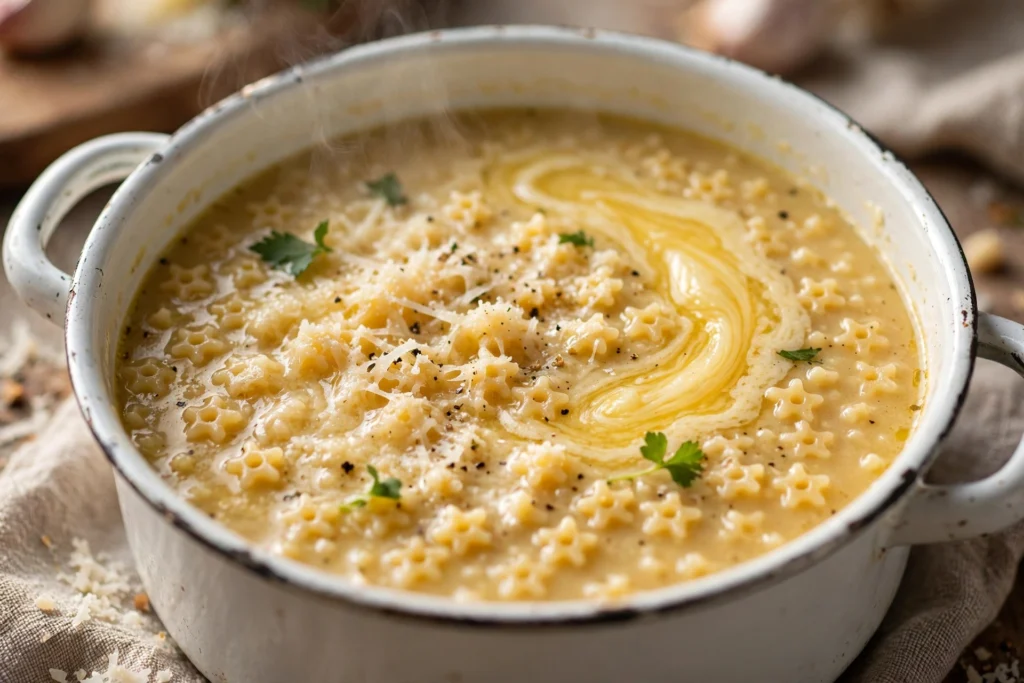
Warm, comforting, and wonderfully simple, this Italian pastina soup combines tiny pasta with flavorful chicken broth, butter, and Parmesan cheese. It is an easy meal for cold evenings, busy days, or whenever you need a soothing bowl of homemade comfort food.
By Chef | Dazzling Recipe
- Preparation time: 5 minutes
- Cooking time: 15 minutes
- Total time: 20 minutes
- Servings: 4
- Cuisine: Italian
- Course: Soup
What Is Pastina?
The word pastina means “little pasta” in Italian. It refers to several miniature pasta shapes, including stars called stelline, tiny rounds, small tubes, and little grains resembling rice.
Italian families commonly cook pastina in broth and finish it with butter, Parmesan, or egg. The result is a wonderfully comforting dish with a delicate flavor and soft texture.
Why You’ll Love This Recipe
- Ready in approximately 20 minutes
- Made with a handful of ingredients
- Warm, soothing, and family-friendly
- Easy to customize
- Perfect for lunch or a light dinner
- Can be prepared with chicken or vegetable broth
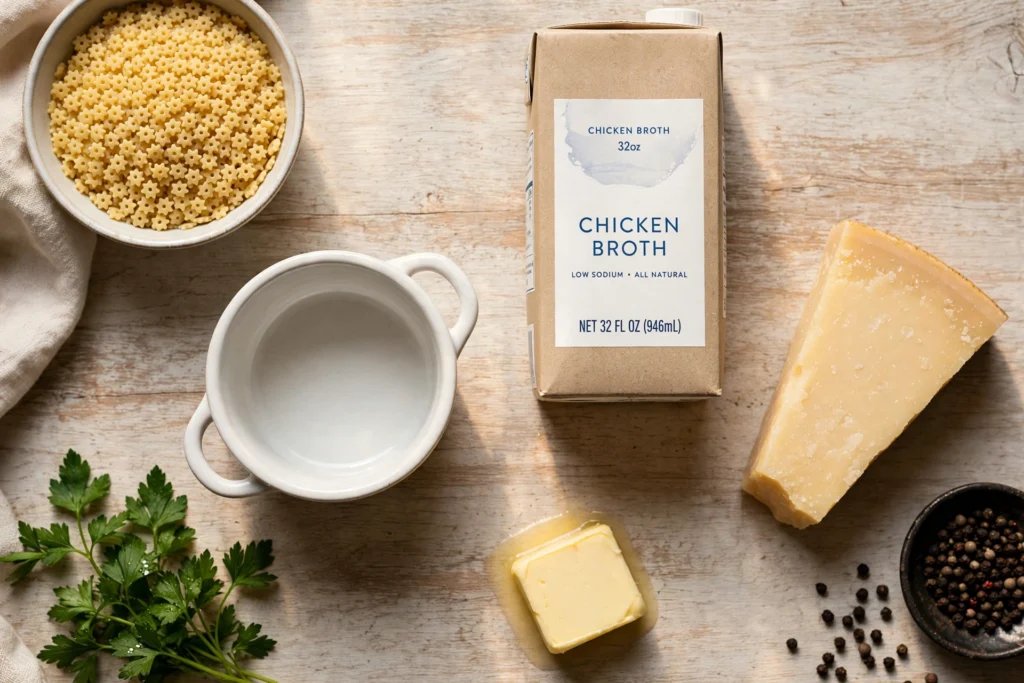
Ingredients
- 6 cups (1.4 liters) low-sodium chicken broth
- 1 cup (180 g) pastina or stelline pasta
- 1 tablespoon (14 g) unsalted butter
- ½ cup (50 g) freshly grated Parmesan cheese
- ¼ teaspoon freshly ground black pepper
- Salt to taste
- 1 tablespoon chopped fresh parsley, optional
- Extra Parmesan for serving
How to Make Italian Pastina Soup
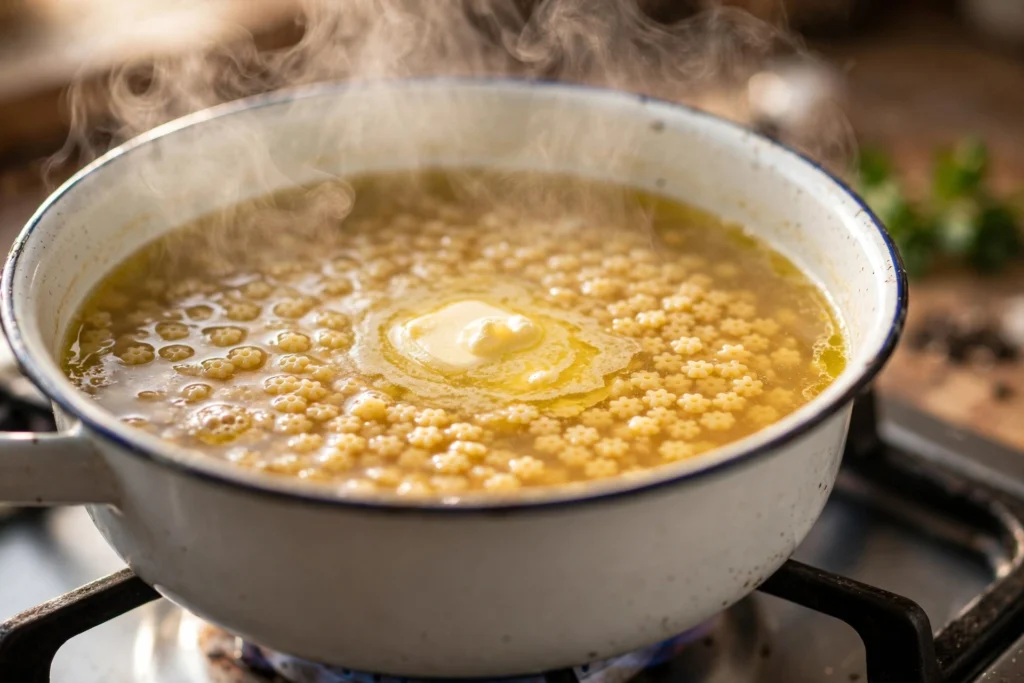
1. Heat the broth
Pour the chicken broth into a medium saucepan. Bring it to a gentle boil over medium-high heat.
Taste the broth before adding salt, especially if you are using packaged broth or salty Parmesan.
2. Add the pastina
Stir the pastina into the boiling broth. Reduce the heat to medium-low and cook according to the package instructions, usually 5–7 minutes.
Stir frequently because tiny pasta can settle at the bottom of the saucepan.
3. Add butter and Parmesan
When the pasta is tender, reduce the heat to low. Stir in the butter and grated Parmesan until melted.
The cheese and starch from the pasta will give the broth a lightly creamy, silky texture.
4. Season the soup
Add freshly ground black pepper and taste the soup. Add salt only if needed.
If the soup becomes thicker than you prefer, stir in a little additional hot broth or water.
5. Serve
Spoon the soup into warm bowls. Garnish with parsley, black pepper, and extra Parmesan. Serve immediately.
Chef ‘s Tips
- Use freshly grated Parmesan for the smoothest texture.
- Keep the broth at a gentle boil so it does not evaporate too quickly.
- Stir the pastina frequently to prevent sticking.
- Remember that the pasta continues absorbing broth after cooking.
- Add more broth for a traditional soup consistency.
- Use slightly less broth if you prefer creamy, porridge-style pastina.
- Serve the soup immediately for the best texture.
Optional Creamy Egg Variation
For an even richer soup, whisk one large egg with two tablespoons of grated Parmesan.
When the pasta is completely cooked, reduce the heat to low. Slowly pour the egg mixture into the hot soup while stirring continuously. Cook gently until the egg is fully set and the soup becomes creamy.
Do not add the egg directly to rapidly boiling broth, as it may form large scrambled pieces.
Easy Variations
Vegetarian pastina
Replace the chicken broth with a flavorful vegetable broth.
Lemon pastina soup
Add one teaspoon of finely grated lemon zest and a small squeeze of lemon juice before serving.
Pastina with vegetables
Add finely diced carrots, celery, or zucchini to the broth. Cook the vegetables until tender before adding the pasta.
Chicken pastina soup
Stir in one or two cups of shredded cooked chicken during the final few minutes.
Creamy pastina
Use only four cups of broth and increase the butter and Parmesan slightly. The result will be thicker and closer to risotto.
What Can I Use Instead of Pastina?
If traditional pastina is unavailable, try:
- Stelline
- Acini di pepe
- Orzo
- Ditalini
- Alphabet pasta
- Broken angel-hair pasta
Larger pasta shapes may require additional broth and a longer cooking time.
What to Serve with Pastina Soup
Pastina soup is satisfying on its own, but it also pairs well with:
- Garlic bread
- Focaccia
- Grilled cheese
- Tomato and mozzarella salad
- Roasted vegetables
- Simple green salad
- Italian chicken cutlets
Storage and Reheating
Allow leftover soup to cool and transfer it to an airtight container. Refrigerate it for up to three days.
Pastina absorbs a considerable amount of broth while refrigerated. When reheating, add extra broth or water until the soup reaches your preferred consistency.
Reheat gently on the stove, stirring frequently. For the best texture, you can also cook the pasta separately and add it to individual servings of broth.
Frequently Asked Questions
Is pastina a specific pasta shape?
Pastina is a general name for extremely small pasta. Stelline, which are tiny stars, are among the most recognizable varieties.
Can I cook pastina in water?
Yes, but broth gives the dish significantly more flavor. If using water, add additional seasoning, butter, and Parmesan.
Why did my pastina soup become thick?
The small pasta releases starch and continues absorbing liquid after cooking. Simply add more warm broth or water.
Can I freeze pastina soup?
The broth can be frozen, but cooked pastina may become very soft after thawing. For better results, freeze the broth separately and cook fresh pasta when serving.
Can I make this recipe without Parmesan?
Yes. Use olive oil or a dairy-free butter alternative and choose a suitable plant-based Parmesan substitute.
Final Thoughts
Italian pastina soup proves that the simplest recipes can be the most comforting. With warm broth, delicate pasta, butter, and Parmesan, this easy dish delivers homemade flavor in only 20 minutes.
Keep a package of tiny pasta in your pantry, and you will always have the foundation for a quick and satisfying Italian meal.