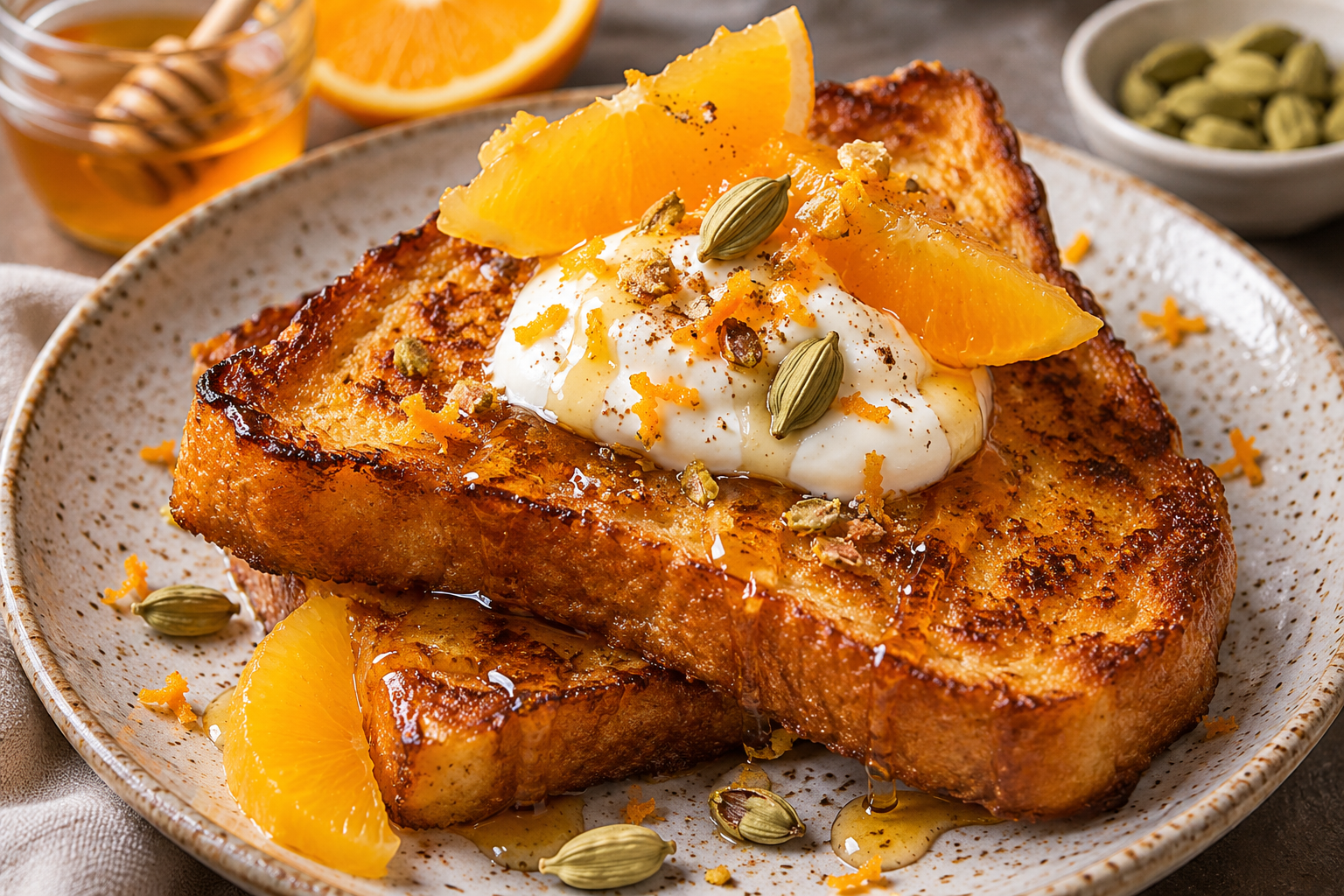
Orange Cardamom French Toast with Honey Yogurt: 5 Amazing Tips
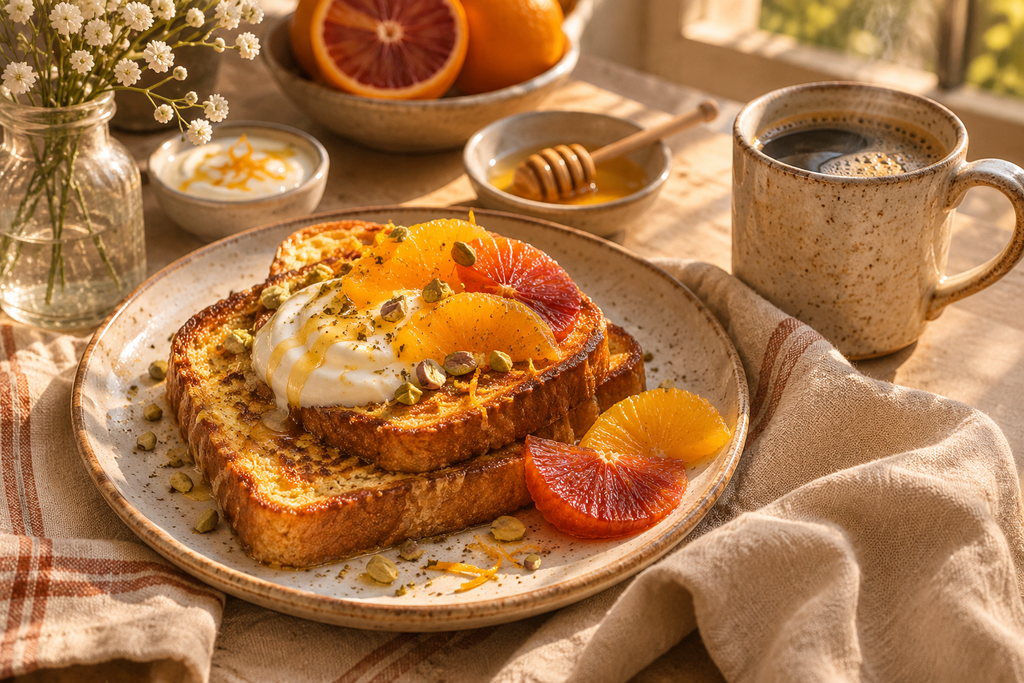
Orange cardamom French toast brings a little sunshine to a chilly morning. Thick slices of brioche develop a golden, buttery crust while the center stays soft and fragrant with fresh orange zest, vanilla and warm spices. A spoonful of honey-sweetened yogurt and a scattering of toasted almonds turn an ordinary breakfast into a colorful brunch plate without requiring a complicated sauce.
This recipe takes inspiration from the orange, cinnamon and honey flavors familiar in Moroccan kitchens, with cardamom adding its own floral note. It is a contemporary twist on French toast rather than a traditional Moroccan dish. Make it for a holiday breakfast, a relaxed Sunday morning or a special meal using bread left over from the night before.
Why you will love this orange cardamom French toast
Fresh citrus gives the custard a bright aroma without making the bread excessively wet. The zest does most of the work, while a small splash of juice rounds out the flavor. Cardamom is deliberately used sparingly so it complements the orange rather than overpowering it.
Unlike an overnight casserole, this version cooks in a skillet and can be made without advance planning. The honey yogurt offers a cool, tangy contrast to the warm toast, and the almonds add crunch. You can put the toppings on the table separately so everyone can build a plate to suit their taste.
For a larger brunch spread, pair it with our avocado toast with poached egg for a savory option or our berry pancakes for another sweet breakfast.
Recipe at a glance
- Preparation: 15 minutes
- Cooking: approximately 20 minutes
- Total: approximately 35 minutes
- Servings: 4 (two slices each)
- Equipment: shallow dish, whisk, fine grater, skillet and spatula
- Difficulty: easy
Ingredients for orange brioche French toast
For the toast
- 8 slices day-old brioche, about 1 inch thick (approximately 400 g total)
- 4 large eggs (about 200 g without shells)
- 3/4 cup whole milk (180 mL)
- 2 tablespoons fresh orange juice (30 mL)
- 2 teaspoons finely grated orange zest (about 4 g)
- 1 tablespoon light brown sugar (13 g)
- 1 teaspoon vanilla extract (5 mL)
- 1/2 teaspoon ground cardamom (about 1 g)
- 1/4 teaspoon ground cinnamon (about 0.7 g)
- 1/4 teaspoon fine salt (about 1.5 g)
- 2 tablespoons unsalted butter (28 g), divided
- 2 teaspoons neutral cooking oil (10 mL), divided
For the honey yogurt and toppings
- 3/4 cup plain Greek yogurt (180 g)
- 1 tablespoon honey (21 g), plus more if desired
- 2 medium oranges, peeled and sliced (about 260 g edible fruit)
- 1/4 cup sliced almonds (23 g)
Choose a firm loaf rather than very soft sandwich bread. Brioche is rich enough to taste satisfying without a heavy cream custard, but challah or a sturdy country loaf will also work. Wash the oranges under running water before grating the peel. Ground green cardamom is convenient; avoid substituting smoky black cardamom, which has a very different flavor.
How to make orange cardamom French toast
1. Prepare the bread and oranges
Cut the brioche into eight even slices. If the loaf is particularly fresh, arrange the slices on a rack and let them air-dry while you prepare the remaining ingredients. Alternatively, dry them in a 275°F (135°C) oven for about eight minutes, without letting them become hard. Allow them to cool before dipping.
Grate the orange peel with a fine grater, stopping before you reach the bitter white pith. Squeeze enough juice for the custard, then peel and slice the oranges for serving. Remove any seeds and keep the fruit separate from the bread so the slices do not become damp.
2. Mix the fragrant custard
Rub the orange zest into the brown sugar with your fingertips in a wide bowl. This releases aromatic oils into the sugar and helps distribute the citrus flavor. Add the eggs and whisk until the whites and yolks are fully blended. Pour in the milk, orange juice and vanilla, then whisk in the cardamom, cinnamon and salt.
Use a shallow dish wide enough to hold a slice flat. Whisk again between batches because ground spices can settle. Do not taste the raw egg mixture; adjust the sweetness at the table with honey instead.
3. Prepare the toppings
Toast the sliced almonds in a dry skillet over medium-low heat for two to four minutes, stirring frequently until lightly golden. Transfer them to a plate immediately because residual heat can burn thin nuts. Wipe the skillet clean. In a separate bowl, stir the yogurt and honey until smooth. Refrigerate the yogurt until serving.
4. Dip and cook the bread
Warm a large skillet over medium-low to medium heat. Add a portion of the butter and oil. Once the butter begins to foam, dip two slices of bread into the custard, allowing roughly ten to fifteen seconds per side. Firmer bread may need slightly longer; delicate brioche may need less. Lift each slice and let the excess drip back into the dish.
Place the slices in the skillet with space between them. Cook for about three to four minutes on the first side, then flip and cook for another three to four minutes. Adjust the heat as necessary so the crust turns golden gradually and the center cooks through. For food safety, egg-based dishes should reach 160°F (71°C); check the thickest part with an instant-read thermometer.
Repeat with the remaining slices, adding fresh butter and oil in small amounts. If the pan contains dark burnt crumbs, carefully wipe it before the next batch. A large griddle can accommodate more slices at once; a small skillet may extend the cooking time.
5. Assemble and serve
Arrange two slices on each plate. Add a spoonful of honey yogurt, fresh orange slices and toasted almonds. Serve immediately, with extra honey on the side if desired. For a pretty presentation, place the yogurt beside the toast rather than covering the entire crust. That way, every bite can include a little of each texture.
Tips for French toast that is not soggy
The biggest difference between a crisp exterior and a wet, heavy slice is the combination of bread structure, soaking time and heat. Very fresh bread already contains plenty of moisture, so it can absorb too much custard before you realize it. Slightly dry bread gives you more control.
Keep the custard shallow and dip slices only as you are ready to cook them. Do not leave the entire loaf soaking while the skillet heats. A slice should feel moist but still hold its shape when lifted. If it bends dramatically or starts tearing, shorten the next dip.
Moderate heat matters just as much. A smoking pan can brown the sugar and butter before the middle has set. If the surface becomes dark in less than two minutes, lower the heat. If the bread remains pale after several minutes, increase it slightly. Avoid pressing the toast with the spatula, which squeezes out custard and reduces the soft interior.
Ingredient substitutions and variations
Without brioche: Use challah, thick Texas toast or a mild sourdough. Sourdough has a pleasantly tangy flavor and may require a longer dip. Check the bread label if you are avoiding particular allergens.
Dairy-free: Replace the milk with unsweetened oat or soy milk, use neutral oil or dairy-free butter for cooking, and serve with a plant-based yogurt. Choose a dairy-free loaf as well, since traditional brioche usually contains butter.
Nut-free: Omit the almonds and use toasted pumpkin seeds if suitable for your dietary needs. The orange and yogurt already provide plenty of flavor, so the nuts are entirely optional.
Extra Moroccan-inspired flavor: Stir a few drops of food-grade orange blossom water into the yogurt. Start with a very small amount because the fragrance is concentrated. A pinch of cinnamon over the orange slices also works beautifully.
Different fruit: Try clementines, blood oranges or sliced pears. In warmer months, strawberries make a lovely contrast. Maple syrup can replace honey, and a little orange marmalade can be served on the side for those who enjoy a bittersweet finish.
What to serve with this holiday brunch recipe
Build a balanced brunch around the toast rather than preparing several rich dishes that compete with one another. A bowl of fresh fruit, scrambled eggs or plain yogurt gives guests simple choices. For an elegant Moroccan-inspired drink, offer mint tea or our avocado and date smoothie (Zazaa). If you prefer a light, airy alternative for another morning, explore our Japanese soufflé pancakes.
When hosting, set out the oranges, yogurt and almonds in separate bowls before cooking. Warm the serving plates if practical and cook the toast in batches. Keep finished slices on a rack in a 200°F (93°C) oven briefly while you finish the rest; the rack helps prevent steam from softening the underside.
Make-ahead, storage and reheating
Slice the bread and toast the almonds the evening before. Store the almonds in a dry airtight container once completely cool. The honey yogurt can also be mixed in advance and refrigerated in a covered container. Prepare the egg custard shortly before cooking, or refrigerate it covered overnight and whisk it again before use.
Refrigerate leftover cooked French toast within two hours, or within one hour if the surrounding temperature exceeds 90°F (32°C). Store the toast separately from the fruit and yogurt in a covered container at 40°F (4°C) or below and use within three to four days. Reheat leftovers to 165°F (74°C). For a crisp finish, use a skillet over moderate heat or a 350°F (175°C) oven rather than relying solely on a microwave.
To freeze, cool the cooked slices promptly, separate them with parchment and place them in a freezer-safe container. Use within about two months for best texture. Reheat directly from frozen in the oven until thoroughly hot. Discard leftover raw dipping custard rather than saving it for another meal. See the FoodSafety.gov temperature chart for safe cooking and reheating guidance.
Frequently asked questions
Can I make orange French toast without cardamom?
Yes. Omit it and increase the cinnamon to half a teaspoon, or add a small pinch of nutmeg. The orange zest and vanilla will still give the custard a distinctive fragrance.
Can I use orange juice instead of orange zest?
Juice alone gives a milder citrus flavor and adds extra liquid. For the best texture, keep the juice quantity as written and use zest whenever possible. A small amount of food-grade orange extract can substitute for zest according to the package directions.
Can I prepare the bread in the custard overnight?
This skillet recipe is designed for a short dip. Overnight soaking can make brioche too fragile to turn. Prepare the components separately the night before, or choose a dedicated baked French toast casserole recipe for overnight soaking.
How do I know when the center is cooked?
The slice should feel set rather than wet or squishy, with no visible liquid egg. A food thermometer inserted into the center is the most reliable check; aim for 160°F (71°C).
Can I double the recipe for Christmas morning?
Yes. Double all ingredients and cook in batches on a large griddle if possible. Keep the cooked slices warm on a rack and add toppings just before serving. Allow extra cooking time if you have only one small skillet.
A bright start to a winter morning
Orange cardamom French toast is a simple way to give familiar breakfast ingredients a fresh personality. The combination of warm bread, fragrant citrus, cool honey yogurt and crunchy almonds makes a festive plate without a long shopping list. Serve it as written or adapt the toppings to the fruit and spices you already have at home.