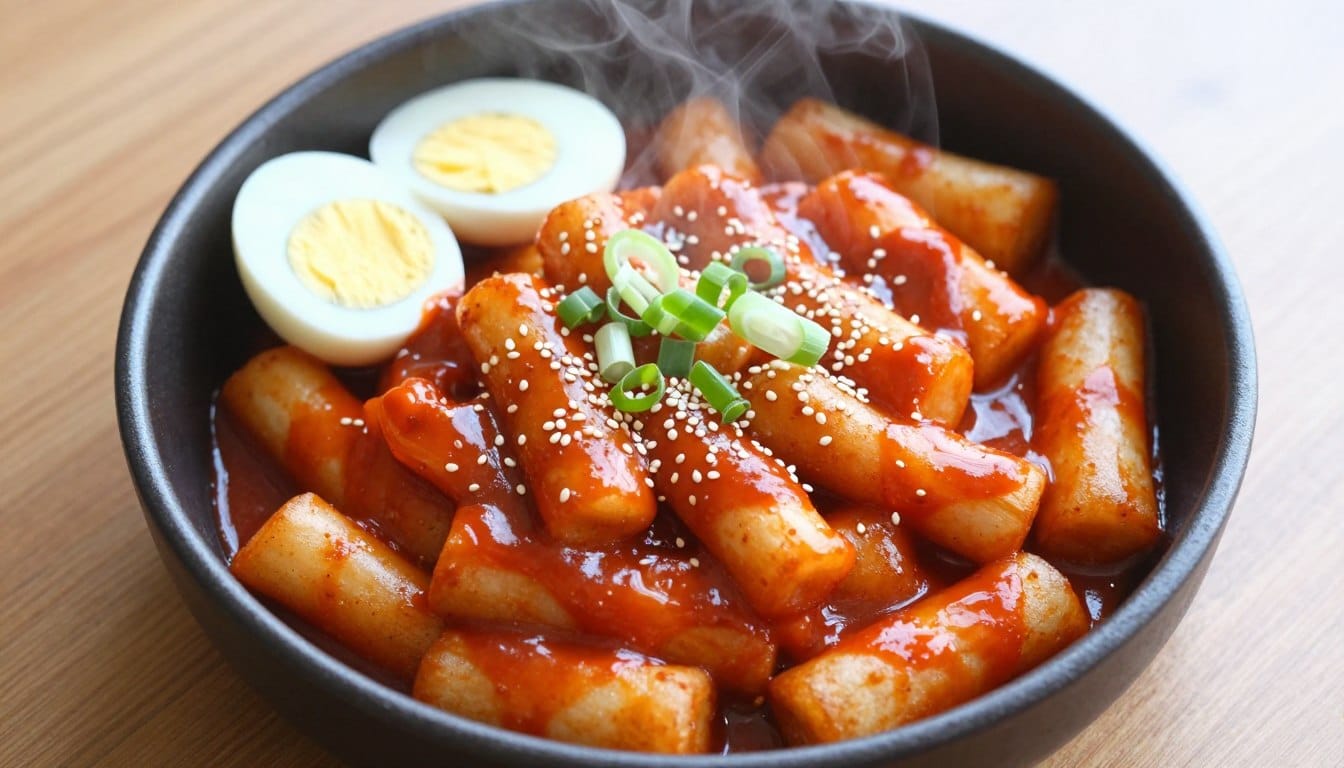
Korean Tteokbokki Recipe: Quick 20-Minute Spicy Rice Cakes

Craving authentic Korean street food but short on time? This Korean Tteokbokki recipe delivers restaurant-quality spicy rice cakes in just 20 minutes. Whether you’re new to Korean food or a seasoned home cook, this dish brings the bold flavors of Seoul’s street markets right to your kitchen.
Tteokbokki (떡볶이) is Korea’s most beloved street food. The chewy rice cakes swimming in spicy, sweet sauce create an addictive combination. This version simplifies traditional methods without sacrificing authentic flavor.
Ready to master this iconic Korean dish? Let’s get started with everything you need to know.
What Is Tteokbokki?
Tteokbokki is a popular Korean dish featuring chewy rice cakes cooked in a spicy, slightly sweet sauce. The name combines “tteok” (rice cake) and “bokki” (stir-fried). This comfort food originated in Korean royal court cuisine as gungjung tteokbokki, a non-spicy soy-based version.
Modern spicy tteokbokki emerged in the 1950s when street vendors started using gochujang (Korean chili paste). Today, you’ll find this dish at nearly every Korean street food stall, restaurant, and home kitchen.

The dish typically includes fish cakes, boiled eggs, and green onions. The sauce combines gochujang, gochugaru (Korean chili flakes), sugar, and soy sauce. Each ingredient plays a crucial role in creating the signature taste.
Quick Tip: Fresh rice cakes work best, but refrigerated ones are fine if you soak them first. This ensures they cook evenly and maintain their signature chewy texture.
Essential Ingredients for Korean Tteokbokki
Success starts with the right ingredients. Korean Tteokbokki requires specific components that create its distinctive flavor profile. Let’s break down what you’ll need and where to find it.

Main Ingredients
Rice Cakes (Tteok)
The star ingredient. Look for garaetteok, cylinder-shaped rice cakes. You’ll need about 1 pound for this recipe. Find them in Korean markets or Asian grocery stores.
- Fresh rice cakes need no prep
- Refrigerated ones require a 10-minute warm water soak
- Frozen rice cakes should thaw completely
Gochujang (Korean Chili Paste)
This fermented red chili paste provides the base flavor. It’s both spicy and slightly sweet. You can’t substitute this ingredient without compromising the authentic taste.
- Measure 3 tablespoons for medium heat
- Adjust quantity based on spice preference
- Store opened containers in the refrigerator
Sauce Components
Gochugaru (Korean Chili Flakes)
These Korean chili flakes add extra heat and vibrant red color. Unlike regular chili flakes, gochugaru has a unique fruity, slightly smoky flavor.
- Use 1-2 tablespoons for an authentic spice level
- Adjust to taste preference
- Essential for proper color
Stock Base
Traditional recipes use anchovy stock (myeolchi yuksu) or dried kelp stock. These create umami depth that water alone can’t provide.
- Anchovy stock offers the most authentic flavor
- Dried kelp provides vegetarian option
- Plain water works in a pinch
Additional Components
- Fish Cakes: Pre-packaged Korean fish cakes (eomuk) add protein and texture
- Soy Sauce: 1 tablespoon for depth and saltiness
- Sugar: 2 tablespoons to balance the spice
- Green Onions: Fresh garnish that adds color and mild flavor
- Boiled Eggs: Classic addition that complements the spicy sauce
- Sesame Oil: Final drizzle for nutty aroma
Get Your Ingredients Ready
Most ingredients are available at your local Asian market or online. Having everything prepped before cooking makes the process smooth and stress-free.
Making Quick Anchovy Stock
Anchovy stock elevates tteokbokki from good to exceptional. This simple stock adds umami depth that transforms the entire dish. The good news? It takes only 10 minutes.

Ingredients for Anchovy Stock
- 2 cups water
- 5-6 medium dried anchovies (heads and guts removed)
- 1 piece dried kelp (about 2×2 inches)
- Optional: 1 small piece of dashima for extra flavor
Quick Stock Method
- Remove heads and black intestines from dried anchovies to prevent bitterness
- Add water, cleaned anchovies, and dried kelp to a shallow pot
- Bring to a boil over medium-high heat
- Reduce heat and simmer for 5-7 minutes
- Strain out solids and use the liquid immediately
The stock should smell oceanic and savory. This base creates the foundation for your sauce. If you’re short on time, you can use water, but the flavor won’t be as complex.
Time-Saving Tip: Make a large batch of anchovy stock and freeze it in ice cube trays. Pop out cubes as needed for future tteokbokki sessions or other Korean recipes.
Step-by-Step Tteokbokki Recipe
Now comes the fun part. Follow these seven simple steps to create perfect Korean Tteokbokki. Each step builds on the previous one, creating layers of flavor in just 20 minutes.

Step 1: Prepare the Rice Cakes
Start by checking the condition of your rice cake. Fresh rice cakes can go directly into the pan. Refrigerated rice cakes need special attention to restore their texture.
- Place refrigerated rice cakes in a bowl
- Cover with warm (not hot) water
- Soak for 10 minutes to soften
- Drain completely before cooking
This step prevents tough, chewy rice cakes that won’t absorb sauce properly. Proper preparation ensures even cooking throughout.
Step 2: Make the Sauce
The sauce makes or breaks your tteokbokki. Creating the right balance of spicy, sweet, and savory takes precision but isn’t complicated.

- Pour 2 cups of anchovy stock (or water) into a shallow pot or large pan
- Add 3 tablespoons of gochujang
- Add 1-2 tablespoons of gochugaru (Korean chili flakes)
- Add 2 tablespoons of sugar
- Add 1 tablespoon soy sauce
- Whisk everything together until smooth
The sauce should be well-combined with no lumps of gochujang. Taste and adjust the sweetness or spice level now, before adding rice cakes.
Step 3: Cook the Rice Cakes
Time to add rice cakes to your prepared sauce. This step requires attention to prevent sticking and ensure even cooking.

- Bring the sauce mixture to a gentle boil over medium heat
- Add drained rice cakes to the pan
- Stir gently to coat all pieces with sauce
- Cook for 6-8 minutes, stirring occasionally
- Keep the heat at medium to prevent burning
Watch as the rice cakes soften and the sauce begins to reduce. They should become tender but maintain a pleasant chew. Don’t rush this step with high heat.
Step 4: Add Fish Cakes
Fish cakes absorb the spicy sauce while adding protein and textural variety. They cook quickly, so timing matters here.
- Slice fish cakes into bite-sized strips
- Add them after rice cakes have cooked for 4-5 minutes
- Stir to distribute evenly
- Cook for an additional 2-3 minutes
Fish cakes should be heated through and slightly chewy. They’ll turn from pale to slightly translucent as they absorb the sauce.
Step 5: Simmer Until Thick
The final cooking stage concentrates flavors and creates that signature glossy, clingy sauce. This step transforms the dish from good to restaurant-quality.

- Continue cooking over medium heat
- Stir frequently to prevent sticking
- Watch for the sauce to reduce by about half
- Sauce should coat the back of a spoon when ready
- Total simmer time: 3-4 minutes
The sauce will become thick and glossy, clinging to each rice cake. If it gets too thick, add a splash of stock or water. Too thin? Cook a bit longer.
Step 6: Garnish
Garnishes aren’t just decoration. They add fresh flavors that balance the rich, spicy sauce and make the dish Instagram-worthy.
- Add halved boiled eggs (prepare while cooking)
- Sprinkle sliced green onions over everything
- Drizzle 1 teaspoon of sesame oil for a nutty aroma
- Optional: sprinkle sesame seeds for extra texture

The eggs provide cooling relief from the spice. Green onions add freshness. Sesame oil brings everything together with its distinctive aroma.
Step 7: Serve Hot
Tteokbokki is best enjoyed immediately while the rice cakes are soft and warm. The texture changes as it cools, becoming firmer and less appealing.
- Transfer to serving bowls or plates while hot
- Serve with small forks or chopsticks
- Provide napkins – this dish is deliciously messy
- Pair with pickled radish (danmuji) to cut the heat
Traditional Korean street food style serves tteokbokki in shallow bowls with toothpicks. At home, use whatever you prefer. Just don’t let it sit too long before eating.
Save This Recipe
Print or save this recipe for your next Korean cooking adventure. Perfect for weeknight dinners or impressing guests with authentic Korean street food.
Popular Tteokbokki Variations
Once you master the basic recipe, explore these popular variations. Each version offers a different take on this beloved Korean dish, from mild to extra spicy.

Cheese Tteokbokki
Korean street food vendors popularized this fusion version. Adding cheese creates a creamy, milder dish that appeals to those who find traditional tteokbokki too spicy.
- Add mozzarella cheese during the last 2 minutes of cooking
- Stir until melted and stringy
- Reduces overall spice level
- Popular with kids and spice-sensitive eaters
Seafood Tteokbokki
This version adds ocean flavors to complement the anchovy stock base. Common additions include squid, shrimp, and mussels.
- Add seafood during Step 4 with fish cakes
- Squid cooks in 2-3 minutes
- Shrimp turn pink when ready
- Creates a more substantial meal
Gungjung Tteokbokki (Royal Court Style)
The original non-spicy version from the Korean royal court cuisine. This version uses soy sauce instead of gochujang, creating a completely different flavor profile.
- Skip gochujang and gochugaru entirely
- Use soy sauce as the base
- Add beef, vegetables, and mushrooms
- Perfect for those who avoid spicy food
Rabokki (Ramen + Tteokbokki)
This popular Korean street food combination adds instant ramen noodles to traditional tteokbokki. It creates a heartier, more filling dish.
- Add instant ramen noodles during Step 5
- Cook for 2-3 additional minutes
- Noodles absorb sauce beautifully
- Increases portion size significantly
Serving Suggestions and Pairings
Tteokbokki shines as a snack, appetizer, or main dish. Understanding traditional Korean serving styles helps you present this dish authentically and deliciously.

Traditional Korean Street Food Style
Korean street food vendors serve tteokbokki in shallow paper cups or bowls with toothpicks. This casual presentation works perfectly for parties or casual gatherings.
- Serve in individual portions
- Provide toothpicks or small forks
- Include pickled radish on the side
- Offer wet wipes for messy fingers
Perfect Pairings
Side Dishes
- Pickled Radish (Danmuji): Yellow pickles cut the spice perfectly
- Kimchi: Adds fermented tang and extra vegetables
- Korean Fried Chicken: Classic Korean combination
- Kimbap: Rice rolls balance the spicy rice cakes
Beverages
- Soju: Traditional Korean spirit
- Beer: Cold lager cuts through the heat
- Milk: Surprisingly popular in Korea for spicy food
- Iced Tea: Refreshing non-alcoholic option
Meal Ideas
- Lunch: Serve as a main dish with kimchi and soup
- Snack: Smaller portions between meals
- Party Food: Make large batches for gatherings
- Dinner: Pair with Korean fried chicken and beer
Storage and Reheating Tips
While tteokbokki tastes best fresh, you can store and reheat it successfully. Proper storage maintains texture and flavor for later enjoyment.
Storing Leftovers
- Cool completely before refrigerating
- Store in airtight container
- Refrigerate for up to 3 days
- Keep sauce and rice cakes together
Rice cakes will harden in the refrigerator. This is normal and reversible through proper reheating.
Reheating Methods
Stovetop Method (Best)
- Add tteokbokki to a pan
- Add 2-3 tablespoons water or stock
- Heat over medium-low heat
- Stir frequently until sauce loosens
- Heat until rice cakes soften (5-7 minutes)
Microwave Method
- Place in microwave-safe bowl
- Add 2 tablespoons water
- Cover with microwave-safe lid
- Heat on high for 2 minutes
- Stir and heat additional 1-2 minutes
Important: Don’t freeze tteokbokki. Freezing ruins rice cake texture, making them crumbly and unpleasant. Always store in the refrigerator and consume within 3 days.
Troubleshooting Common Issues
Even experienced cooks encounter challenges with tteokbokki. Here are solutions to the most common problems you might face.
Sauce Too Thin
Watery sauce won’t coat rice cakes properly and lacks intensity. This usually happens when you use too much stock or don’t simmer long enough.
- Continue simmering to reduce liquid
- Add 1 tablespoon of gochujang for thickness
- Mix 1 teaspoon cornstarch with water, stir in
- Cook uncovered to encourage evaporation
Sauce Too Thick
Overly thick sauce becomes sticky and hard to eat. It can also burn on the bottom of the pan.
- Add stock or water, 1/4 cup at a time
- Stir well to incorporate
- Reduce heat immediately
- Don’t let it stick to the pan
Rice Cakes Too Hard
Hard rice cakes indicate insufficient soaking or cooking time. They should be soft and chewy, not tough.
- Soak refrigerated rice cakes longer (15-20 minutes)
- Add more liquid and cook longer
- Use medium heat, not high
- Ensure rice cakes are submerged in sauce
Rice Cakes Too Mushy
Overcooking breaks down rice cake structure, creating an unpleasant texture.
- Reduce cooking time to 5-6 minutes
- Use medium heat instead of high
- Don’t stir too vigorously
- Fresh rice cakes cook faster than refrigerated
Not Spicy Enough
Spice level varies by gochujang brand and personal preference.
- Add more gochugaru (Korean chili flakes)
- Increase gochujang by 1 tablespoon
- Add fresh sliced Korean chili peppers
- Taste and adjust before adding rice cakes
Frequently Asked Questions
Can I make tteokbokki without gochujang?
Gochujang is essential for authentic spicy tteokbokki flavor. Without it, you lose the fermented complexity and characteristic taste. However, you can make gungjung tteokbokki, the royal court version, which uses soy sauce instead of gochujang for a non-spicy alternative.
Where can I buy Korean rice cakes?
Find rice cakes (garaetteok) at Korean or Asian grocery stores, usually in the refrigerated or frozen section. Many online retailers also sell them. H Mart, 99 Ranch Market, and local Korean markets are reliable sources. Fresh rice cakes from Korean markets provide the best texture.
Is tteokbokki gluten-free?
Traditional rice cakes are gluten-free, made from rice flour. However, most gochujang contains wheat. Check labels carefully or buy certified gluten-free gochujang. Also verify that soy sauce is gluten-free (use tamari) and check fish cake ingredients, as some contain wheat flour.
How do I reduce the spice level?
Reduce gochujang to 2 tablespoons and skip the gochugaru entirely. Add more sugar (up to 3 tablespoons) to balance remaining heat. Adding cheese or cream also mellows the spice. Serve with milk or yogurt-based drinks, which neutralize capsaicin better than water.
Can I make tteokbokki ahead of time?
Tteokbokki tastes best fresh, but you can prep ingredients in advance. Make sauce and refrigerate separately from rice cakes. Cook just before serving for optimal texture. If you must make it ahead, undercook slightly and reheat with added liquid to prevent rice cakes from becoming too soft.
What’s the difference between tteokbokki and rabokki?
Rabokki combines “ramen” and “tteokbokki.” It’s regular tteokbokki with instant ramen noodles added during cooking. This creates a heartier, more filling dish. Korean street vendors popularized this combination, which has become a menu staple at Korean restaurants.
Nutrition Information
Understanding tteokbokki’s nutritional profile helps you enjoy this dish as part of a balanced diet. While delicious, it’s relatively high in carbohydrates and sodium.
| Nutrient | Amount per Serving | % Daily Value |
| Calories | 350 | 18% |
| Total Fat | 4g | 5% |
| Sodium | 1200mg | 52% |
| Total Carbohydrates | 68g | 25% |
| Dietary Fiber | 2g | 7% |
| Sugars | 12g | – |
| Protein | 8g | 16% |
Based on a 2,000 calorie diet. Values vary based on specific ingredients and portion sizes.
Health Considerations
- High Sodium: Gochujang and soy sauce contribute significant sodium. Reduce soy sauce or use low-sodium versions if watching salt intake.
- Carbohydrate-Rich: Rice cakes are primarily carbohydrates. Pair with protein and vegetables for balanced meals.
- Added Sugar: Recipe includes sugar for traditional flavor balance. You can reduce slightly without major taste impact.
- Capsaicin Benefits: Korean chili ingredients may boost metabolism and provide anti-inflammatory properties.
Master Korean Street Food at Home
You now have everything needed to create authentic Korean Tteokbokki in just 20 minutes. This beloved Korean street food brings restaurant-quality flavor to your home kitchen without complicated techniques or hard-to-find ingredients.
The beauty of this dish lies in its simplicity. Seven straightforward steps transform basic ingredients into a spicy, satisfying meal. Whether you’re cooking for yourself or entertaining guests, tteokbokki delivers impressive results every time.

Remember the key points: properly soften refrigerated rice cakes, create balanced sauce with the right spice level, and don’t overcook. These fundamentals guarantee success whether you’re making classic spicy rice cakes or exploring creative variations.
Start with the basic recipe, then experiment with cheese, seafood, or ramen additions once you master the technique. Each version offers new flavors while maintaining that signature tteokbokki experience.
Korean Tteokbokki brings Seoul’s vibrant street food culture directly to your table. The combination of chewy rice cakes, spicy sauce, and savory fish cakes creates an addictive dish you’ll make again and again.
Ready to Cook?
We’d love to see your tteokbokki creations! Share your cooking experience, variations, and tips with fellow Korean food enthusiasts. Your feedback helps others succeed with this recipe.
What will you try first? Classic spicy version or cheese tteokbokki? Either choice delivers authentic Korean flavors in under 30 minutes total, from prep to plate.
Korean Tteokbokki in 20 Minutes
Learn how to make authentic Korean tteokbokki at home with this easy recipe. These spicy Korean rice cakes in gochujang sauce are a popular Korean street food ready in just 20 minutes.
Type: Main Dish / Street Food / Snack
Cuisine: Korean
Keywords: tteokbokki recipe, korean spicy rice cakes, korean street food, easy korean recipes, korean comfort food, spicy korean food, gochujang recipe, korean snack, korean dinner idea, homemade tteokbokki, asian street food, quick korean recipe, korean rice cake dish, spicy snack recipe, korean food recipe
Recipe Yield: 2–3 servings
Calories: 300–350 calories per serving
Preparation Time: PT10M
Cooking Time: PT10M
Total Time: PT20M
Recipe Ingredients:
- 400 g Korean rice cakes (tteok)
- 2 cups water or anchovy broth
- 2 tablespoons gochujang (Korean chili paste)
- 1 tablespoon gochugaru (Korean chili flakes)
- 1 tablespoon sugar
- 1 tablespoon soy sauce
- 1 teaspoon minced garlic
- 100 g Korean fish cakes, sliced (optional)
- 1 green onion, chopped
- 1 teaspoon sesame oil (optional)
- 1 teaspoon sesame seeds (optional garnish)
- Optional Add-Ins (Popular Variations): 1 boiled egg
- ½ cup shredded mozzarella cheese
- ½ cup cabbage, chopped
- ½ cup ramen noodles
Recipe Instructions: Tteokbokki Recipe Instructions Soak the rice cakes If the rice cakes are hard, soak them in warm water for 10–15 minutes to soften. Fresh rice cakes can skip this step. Prepare the sauce base In a large pan or skillet, add 2 cups of water or anchovy broth. Stir in gochujang, gochugaru, soy sauce, sugar, and minced garlic until well combined. Bring to a simmer Heat the mixture over medium heat and stir until the sauce dissolves and begins to gently simmer. Add the rice cakes Add the Korean rice cakes (tteok) to the pan. Stir occasionally so they don’t stick to the bottom. Add fish cakes Add the sliced fish cakes and continue cooking for 5–7 minutes, stirring frequently as the sauce thickens. Adjust the sauce If the sauce becomes too thick, add a little water. Cook until the rice cakes become soft and chewy. Finish with toppings Add green onions, a drizzle of sesame oil, and sprinkle sesame seeds on top. Serve hot Serve the spicy Korean tteokbokki immediately while hot. You can also add boiled eggs, cheese, or ramen noodles for extra flavor.