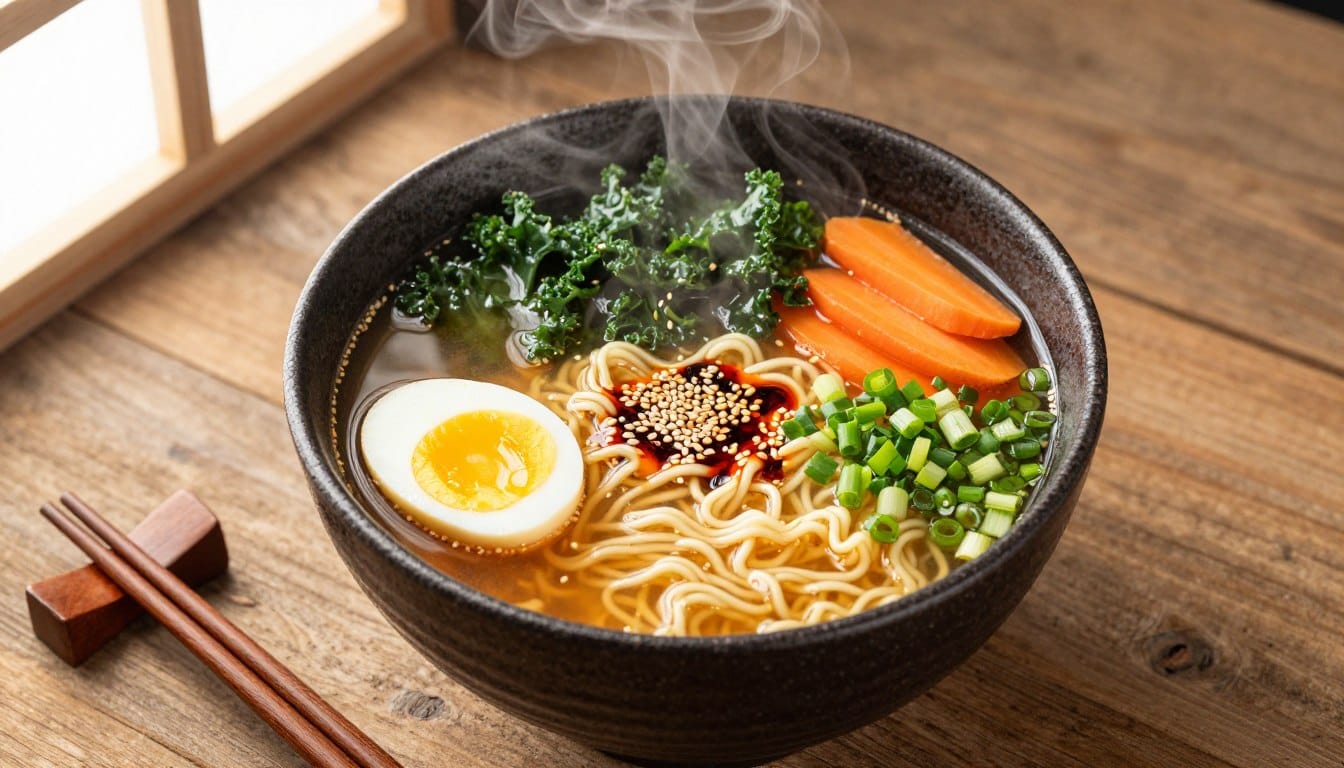
Easy Homemade Ramen Recipe (Better Than Restaurant Ramen)

Imagine slurping perfectly chewy noodles in a rich, aromatic broth that tastes as if it simmered for hours. Now imagine making it in just twenty-five minutes.
That’s exactly what this easy homemade ramen recipe delivers. You don’t need a culinary degree or hard-to-find ingredients.
This recipe transforms simple grocery store staples into restaurant-quality ramen that’ll make you wonder why you ever settled for plain instant noodles. Fresh vegetables, savory broth, and those nostalgic curly noodles come together in one delicious bowl.
Why This Homemade Ramen Recipe Works
Most ramen recipes intimidate home cooks with lengthy ingredient lists and complex techniques. This one takes a different approach.
You’ll use packaged ramen noodles, but ditch that sodium-packed flavor packet. Instead, you’ll build a flavorful broth from scratch in the time it takes to boil water twice.
The secret lies in the aromatics. Garlic and ginger form the flavor foundation.
Dried shiitake mushrooms add that deep umami punch that makes restaurant ramen so addictive. These three ingredients transform ordinary chicken broth into something extraordinary.
Fresh vegetables bring color, texture, and nutrition to your bowl. The beauty of this ramen recipe is its flexibility.
You can swap ingredients based on what’s in your fridge. That’s what makes it perfect for weeknight dinners.
Pro Tip: The longer your aromatics simmer in the broth, the more flavor develops. Even an extra five minutes makes a noticeable difference.
Essential Ingredients for Perfect Homemade Ramen
Let’s talk about what goes into this easy homemade ramen recipe. Every ingredient serves a specific purpose in creating that restaurant-quality taste.
The Noodle Foundation
Standard packaged instant ramen noodles work beautifully here. You’ll use the noodles but skip the flavor packet entirely.
Those curly noodles have the perfect texture and cook quickly in your homemade broth. Each package typically serves one person.
If you prefer fresh ramen noodles from the refrigerated section, those work too. They’ll give you an even more authentic texture.
Flavor Building Blocks
Sesame oil starts your flavor journey. This fragrant oil carries the aromatics throughout your broth.
Fresh ginger and garlic are non-negotiable. Don’t substitute dried versions here.
The fresh aromatics release oils and compounds that create depth. You’ll need about three teaspoons of grated ginger and four teaspoons of minced garlic.
Dried shiitake mushrooms are your umami bomb. These concentrated mushrooms infuse the broth with that savory, almost meaty flavor.
You only need about one ounce, but they pack tremendous flavor. Most grocery stores carry them in the Asian food section.
The Broth Base
Chicken broth forms the liquid foundation. You’ll need four cups of good-quality broth.
Low-sodium versions give you better control over the final seasoning. Vegetable broth works perfectly for a vegetarian version.
Four cups of water dilute the broth to the ideal concentration. This ratio prevents the soup from being too salty while maintaining rich flavor.
Fresh Vegetable Additions
Scallions or chives add a bright, oniony note. You’ll need about half a cup chopped.
Kale or spinach provides nutrients and color. Two cups of chopped greens wilt down perfectly in the hot broth.
Shredded carrots bring sweetness and crunch. One cup adds visual appeal and nutritional value.
Baby bok choy makes an excellent alternative if you prefer its mild flavor and tender texture.
Optional Toppings That Make a Difference
A soft-boiled egg elevates your ramen from good to spectacular. The jammy yolk enriches the broth when you break it.
Crunchy panko crumbs add textural contrast. You’ll toast them in oil until golden and crispy.
Sriracha or chili oil brings heat for those who like spice. A drizzle of toasted sesame oil adds nutty depth.
Soy sauce adjusts the saltiness to your preference. Start with a small amount and add more to taste.
Kitchen Tools You’ll Need
Making this easy homemade ramen recipe doesn’t require specialized equipment. You probably have everything already.
Basic Cooking Equipment
- Large pot or Dutch oven for cooking the soup
- Sharp knife for chopping vegetables
- Cutting board for prep work
- Measuring cups and spoons for accuracy
- Grater or microplane for ginger and garlic
- Small skillet for toasting panko
- Ladle for serving
Serving Essentials
- Deep ramen bowls that hold at least two cups
- Chopsticks for authentic eating experience
- Soup spoons for broth sipping
- Small prep bowls for toppings

The right serving bowl makes a difference. Traditional Homemade Ramen bowls are wide and deep.
They keep your noodles hot while giving you room for all those colorful toppings. If you don’t have ramen bowls, large cereal bowls work fine.
Essential Ramen Serving Set
Upgrade your Homemade Ramen experience with authentic serving bowls, wooden chopsticks, and ceramic soup spoons. These tools make every bowl feel like a restaurant experience.
Shop Ramen BowlsShop Chopsticks
How to Make Easy Homemade Ramen Step by Step
This recipe comes together quickly once you start cooking. Have all your ingredients prepped and ready before you begin.
The entire process takes about twenty-five minutes from start to finish. Most of that time is hands-off simmering.
Step One: Build Your Flavor Base
Heat one tablespoon of sesame oil in your large pot over medium heat. The oil should shimmer but not smoke.
Add your grated ginger and minced garlic. Stir fry for about two minutes.
You’ll smell the aromatics becoming fragrant. This step releases the essential oils that flavor your entire broth.
Don’t rush this part. If the garlic starts browning too quickly, reduce your heat slightly.
Burnt garlic tastes bitter and ruins your broth. You want soft, fragrant aromatics.
Step Two: Create Your Broth
Pour in four cups of chicken broth and four cups of water. Bring the mixture to a gentle simmer.
Add your dried shiitake mushrooms to the simmering liquid. These mushrooms need about ten minutes to rehydrate and release their umami flavor.
Keep the heat at a gentle simmer. Vigorous boiling makes the broth cloudy instead of clear.
Your kitchen will start smelling incredible right about now. That’s how you know the flavors are developing properly.
Time-Saving Tip: While the broth simmers, prepare your toppings. Slice your soft-boiled eggs, chop your vegetables, and toast your panko crumbs.
Step Three: Cook Your Noodles
After the mushrooms have simmered for ten minutes, add your ramen noodles directly to the pot. Break up the noodle blocks gently with chopsticks or a fork.
The instant Homemade Ramen noodles cook in about five minutes. They should be tender but still have some chew.
Add your chopped scallions during the last minute of cooking. They’ll soften slightly while maintaining their bright flavor.
Fresh ramen noodles take slightly less time than instant noodles. Check the package directions and adjust accordingly.
Step Four: Add Your Vegetables
Remove the pot from heat. This prevents your vegetables from overcooking.
Stir in your chopped kale and shredded carrots. The residual heat from the broth will wilt the greens perfectly.
This method keeps your vegetables vibrant and slightly crisp. Nobody wants mushy vegetables in their ramen.
If you’re using spinach instead of kale, it wilts almost instantly. Add it at the very end.
Step Five: Assemble and Serve
Ladle the hot ramen into your serving bowls. Make sure each bowl gets a good amount of noodles, vegetables, and broth.
Now comes the fun part—toppings. Add your soft-boiled egg cut in half to show off that golden yolk.
Sprinkle your toasted panko crumbs over the top for crunch. Add a drizzle of chili oil if you like heat.
Finish with a few drops of toasted sesame oil. A sprinkle of sesame seeds adds visual appeal.
Season with soy sauce to taste. Start conservatively—you can always add more.
Perfect Soft-Boiled Eggs for Ramen
A properly cooked soft-boiled egg is the crown jewel of any ramen bowl. The jammy yolk enriches the broth with every bite.
Getting that perfect consistency is easier than you think. You just need the right timing.
The Foolproof Method
- Bring a pot of water to a rolling boil
- Carefully lower cold eggs from the refrigerator into the boiling water
- Set a timer for exactly six minutes
- Prepare an ice water bath while eggs cook
- When timer goes off, immediately transfer eggs to ice bath
- Let eggs cool for at least five minutes
- Gently tap and peel under running water

Six minutes gives you a set white with a golden, jammy yolk. Seven minutes makes the yolk slightly firmer but still creamy.
The ice bath stops the cooking process instantly. This prevents that gray-green ring around the yolk.
Older eggs peel more easily than fresh ones. If you’re buying eggs specifically for Homemade Ramen, use them after they’ve been in your fridge for at least a week.
Batch Cooking Tip: Make several soft-boiled eggs at once and store them unpeeled in the refrigerator for up to four days. Add them to your ramen whenever you need a quick topping.
Making Crunchy Golden Panko Crumbs
Crispy panko adds an unexpected textural element to your homemadeHomemade Ramen. The crunch contrasts beautifully with the soft noodles.
Making them takes less than five minutes. You have two methods to choose from.
Stovetop Method
Heat two to three tablespoons of neutral oil in a large skillet over medium heat. Add about half a cup of panko breadcrumbs.
Stir constantly with a wooden spoon. The panko turns golden brown in about one minute.
Watch carefully during this process. Panko goes from perfect to burnt very quickly.
When the crumbs turn golden, immediately transfer them to paper towels. This drains excess oil and stops the cooking.
Oven Method
Preheat your oven to three hundred fifty degrees. Toss panko with a tablespoon of oil in a small bowl.
Spread the mixture on a baking sheet in a single layer. Bake for about eight to ten minutes.
Stir halfway through for even browning. The panko should be golden and crispy.
The oven method gives you more control and less hands-on time. It’s perfect if you’re making multiple batches.
Store cooled panko crumbs in an airtight container for up to one week. They maintain their crunch surprisingly well.
Ways to Customize Your Ramen Recipe
This easy homemade ramen recipe serves as a canvas for your creativity. You can adapt it to your taste preferences and dietary needs.
Protein Additions
Shredded rotisserie chicken makes a quick protein boost. Add it during the last few minutes of cooking to heat through.
Thinly sliced pork tenderloin creates an authentic touch. Marinate it in soy sauce and ginger before adding.
Shrimp cooks quickly in the hot broth. Add them in the last three minutes for perfectly tender results.
Firm tofu works beautifully for vegetarian versions. Cube it and add with the noodles.
Sliced beef adds richness. Use tender cuts like sirloin and slice paper-thin for quick cooking.
Vegetable Variations
Baby bok choy provides mild flavor and appealing texture. Quarter it lengthwise and add it with other vegetables.
Fresh corn kernels bring sweetness. They’re especially good in summer versions of this recipe.
Bean sprouts add crunch. Toss them in raw right before serving.
Bamboo shoots give authentic texture. You’ll find them canned in the Asian food section.
Fresh mushrooms complement the dried shiitake. Try enoki, oyster, or cremini varieties.
Snap peas add color and nutrition. Slice them diagonally for visual appeal.
Flavor Boosters
Miso paste deepens the umami flavor. Stir in a tablespoon at the end of cooking.
Fish sauce adds complexity. Start with just half a teaspoon—it’s potent.
Rice vinegar brightens the broth. A splash right before serving lifts all the flavors.
Fresh lime juice adds acidity. Squeeze it over individual bowls.
Gochujang brings Korean-inspired heat. Mix it with a little broth before adding.
Topping Options
Nori sheets provide ocean flavor. Cut them into strips and add just before eating.
Kimchi adds probiotic tang. This Korean staple pairs surprisingly well with ramen.
Pickled ginger offers palate-cleansing brightness. Use the kind served with sushi.
Furikake seasoning brings umami punch. This Japanese seasoning blend contains seaweed, sesame, and fish flakes.
Fresh cilantro adds herbaceous notes. Some love it, some hate it—know your audience.
Make-Ahead and Storage Tips
While this Homemade Ramen tastes best fresh, you can prep components ahead to save time on busy weeknights.
Broth Preparation
The broth base keeps well in the refrigerator for up to four days. Make a double batch and store it in an airtight container.
When ready to serve, reheat the broth and cook fresh noodles. This gives you restaurant-quality ramen in under ten minutes.
The broth actually tastes better the next day. The flavors meld and develop more complexity overnight.
You can freeze the broth for up to three months. Portion it into individual servings for convenience.
Component Prep
Chop your vegetables up to two days ahead. Store them separately in airtight containers.
Make your soft-boiled eggs in advance. They keep for four days in the shell.
Toast your panko crumbs and store them at room temperature. They stay crispy for about a week.
Prep your ginger and garlic paste. Mix them together with a little oil and refrigerate for up to five days.
What Not to Make Ahead
Never cook the noodles in advance. They absorb liquid and become mushy.
Don’t add fresh vegetables to stored broth. They’ll overcook and lose their vibrant color.
Avoid pre-assembling complete bowls. The components will deteriorate quickly.
Adapting This Recipe for Dietary Needs
This easy homemade ramen recipe adapts easily to various dietary preferences and restrictions.
Vegetarian Version
Replace chicken broth with vegetable broth. Use mushroom broth for extra umami depth.
Add extra dried shiitake mushrooms to compensate for the chicken flavor. Double the amount for richness.
Include hearty vegetables like edamame, tofu, or tempeh for protein.
Consider adding a spoonful of white miso paste for savory depth.
Vegan Adaptation
Follow the vegetarian modifications above. Skip the egg topping or use a vegan egg alternative.
Check your noodle package—some instant Homemade Ramen contains eggs. Look for vegan-certified brands.
Use nutritional yeast as a topping for cheesy, savory flavor.
Add extra vegetables and plant-based protein to make the bowl satisfying.
Gluten-Free Option
The biggest challenge is finding gluten-free ramen noodles. Rice noodles make an excellent substitute.
Look for rice stick noodles in the Asian food section. Cook them according to package directions.
Use tamari instead of soy sauce. Tamari is naturally gluten-free.
Check all your packaged ingredients for hidden gluten. Some broths contain wheat derivatives.
Low-Sodium Version
Use low-sodium or no-sodium broth as your base. This gives you complete control over salt levels.
Skip the soy sauce or use a low-sodium variety. Add it drop by drop to control saltiness.
The dried mushrooms add natural sodium. You might be surprised how little extra salt you need.
Fresh herbs like cilantro and Thai basil add flavor without sodium.
Dairy-Free Note
This recipe is naturally dairy-free. You don’t need to make any substitutions.
Just verify your packaged noodles don’t contain milk derivatives. Most instant ramen is dairy-free.
Common Ramen-Making Problems and Solutions
Even simple recipes can present challenges. Here’s how to fix common issues with homemade ramen.
My broth tastes bland and watery
This usually means you added too much water or didn’t simmer the aromatics long enough. Fix it by simmering uncovered to reduce the liquid and concentrate flavors.
Add a tablespoon of soy sauce or a teaspoon of fish sauce. Both boost savory flavor instantly.
Next time, taste your broth before adding noodles. It should taste slightly over-seasoned because the noodles will dilute it.
The noodles absorbed all my broth
Ramen noodles soak up liquid quickly, especially if they sit. Cook your noodles right before serving.
If you need to wait, cook the noodles separately and add them to hot broth at serving time.
Make extra broth—about half a cup more per serving than you think you need.
My vegetables are mushy and overcooked
Remove the pot from heat before adding vegetables. The residual heat will cook them gently.
Cut vegetables into larger pieces. They’ll maintain texture better than tiny pieces.
Some vegetables like bean sprouts and scallions should be added raw as toppings.
The egg yolk came out hard instead of jammy
Your cooking time was too long. Stick to exactly six minutes for jammy yolks.
Make sure your ice bath is ready immediately. Delayed cooling continues cooking the egg.
Use cold eggs straight from the refrigerator. Room temperature eggs cook faster and less predictably.
I can’t find dried shiitake mushrooms
Order them online from retailers like Amazon. They’re shelf-stable and last for months.
Fresh shiitake mushrooms work but provide less umami punch. Slice them thinly and use twice as many.
Add a teaspoon of soy sauce or miso paste to compensate for the missing mushroom flavor.
My broth is too salty
Add more water to dilute the saltiness. Start with half a cup and taste as you go.
A splash of rice vinegar or lime juice can balance excessive saltiness.
Add raw vegetables like shredded cabbage. They absorb some salt while adding nutrition.
Next time, use low-sodium broth and add soy sauce gradually at the end.
Serving and Presentation Tips
Half the appeal of ramen is how it looks in the bowl. Professional presentation makes your homemade ramen feel special.
Plating Techniques
Use wide, deep bowls. They showcase your ingredients while keeping everything hot.
Arrange toppings in sections rather than mixing everything together. This creates visual interest.
Place your egg in the center as the focal point. Cut it right before serving to show off that golden yolk.
Group vegetables by color. The contrast makes your bowl Instagram-worthy.
Add garnishes right before serving. Fresh herbs wilt quickly in hot broth.
Temperature Matters
Warm your serving bowls with hot water before adding . Homemade Ramen. This keeps everything hotter longer.
Serve immediately after assembling. Ramen waits for no one.
Keep toppings at room temperature. Cold eggs and vegetables cool down your broth too quickly.
The Art of Slurping
In Japanese culture, slurping Homemade Ramen is perfectly acceptable. It actually enhances the flavor.
The slurping action aerates the noodles and broth, releasing more aroma. This makes each bite more flavorful.
Use chopsticks to lift noodles and vegetables. Use your spoon for broth and smaller ingredients.
Nutritional Benefits of Homemade Ramen
When you make ramen at home, you control the nutritional content. This recipe offers several health benefits compared to restaurant versions.

Lower Sodium Content
Restaurant ramen often contains over two thousand milligrams of sodium per bowl. Your homemade version has significantly less.
Using low-sodium broth and controlling soy sauce gives you flexibility. You can adjust salt to your dietary needs.
Increased Vegetable Content
This recipe packs in fresh vegetables. You get fiber, vitamins, and minerals with every bowl.
Kale provides vitamin K, vitamin C, and antioxidants. Carrots add beta-carotene for eye health.
Quality Protein
The soft-boiled egg delivers complete protein with all essential amino acids. It also provides vitamin D and B vitamins.
If you add chicken or tofu, you increase the protein content further. This makes your Homemade Ramen a complete meal.
Beneficial Aromatics
Fresh ginger has anti-inflammatory properties. It also aids digestion and can help settle upset stomachs.
Garlic supports immune function and heart health. Both aromatics add flavor without calories.
Nutrition Note: One serving of this homemade ramen recipe contains approximately three hundred to four hundred calories, depending on toppings. This makes it a reasonable meal option for most diets.
Scaling This Recipe for Different Serving Sizes
This easy homemade ramen recipe easily scales up or down. You might need to feed a crowd or just make one quick bowl.
Single Serving
Halve all the ingredients for one generous bowl. Use one package of ramen noodles and two cups of liquid total.
A small pot works better for single servings. Everything heats faster and stays hotter.
The cooking time remains the same. The smaller volume doesn’t affect how long ingredients need to cook.
Feeding a Family
Double the recipe for four servings. You’ll need a larger pot to accommodate the volume.
The broth can be made in advance and reheated. Cook fresh noodles for each serving to prevent mushiness.
Set up a ramen bar with various toppings. Let everyone customize their bowl.
Party-Sized Batch
For six to eight servings, triple or quadruple the broth base. Make it in a large stockpot.
Cook noodles in batches. They clump together if you try to cook too many at once.
Prep all your toppings in advance. Set them out buffet-style for easy assembly.
Keep the broth hot in a slow cooker set to warm. This makes serving easier.
Cost Analysis: Homemade vs Restaurant Ramen
Making ramen at home costs significantly less than eating at restaurants. Let’s break down the economics.
| Item | Restaurant Cost | Homemade Cost | Savings |
| Basic Ramen Bowl | $12-18 | $3-5 | $9-13 per bowl |
| Premium Toppings | $2-5 extra | $1-2 extra | $1-3 per topping |
| Soft-Boiled Egg | $2-3 | $0.25-0.50 | $1.50-2.50 |
| Extra Vegetables | $3-4 | $0.75-1.25 | $2.25-2.75 |
Making ramen at home costs about three to five dollars per serving. Restaurant ramen ranges from twelve to twenty dollars.
If you eat ramen once a week, homemade versions save you about five hundred dollars per year. That’s a significant amount for a simple recipe swap.
Initial Investment
Some ingredients require upfront investment. Sesame oil, dried mushrooms, and good soy sauce cost more initially.
These pantry staples last for months. Your per-serving cost drops dramatically after the first batch.
Fresh ingredients like vegetables and eggs remain affordable. You probably already buy them for other meals.
What to Serve with Homemade Ramen
Ramen makes a complete meal on its own. But certain side dishes enhance the experience.
Traditional Japanese Sides
Gyoza dumplings pair perfectly with ramen. You can buy frozen ones and pan-fry them in minutes.
Edamame makes a healthy appetizer. Just boil the pods and sprinkle with sea salt.
Japanese cucumber salad provides cooling contrast. The vinegar dressing cuts through the rich broth.
Seaweed salad adds oceanic flavor. Most grocery stores sell it pre-made in the deli section.
Simple Appetizers
Spring rolls offer textural variety. The crispy wrapper contrasts with soft noodles.
Miso soup makes an authentic starter. It prepares your palate for the main event.
Tempura vegetables add crunch. Sweet potato and broccoli work especially well.
Beverages
Green tea is traditional and refreshing. It cleanses your palate between bites.
Japanese beer like Sapporo or Asahi complements the meal. Their light, crisp flavor doesn’t overwhelm.
Sake works for special occasions. Choose a mild variety that won’t compete with the broth.
For non-alcoholic options, try sparkling water with lemon. The bubbles and acidity refresh your mouth.
Regional Ramen Variations to Try
Once you master this basic easy homemade ramen recipe, experiment with regional styles from Japan.
Miso Ramen
Add three tablespoons of white or red miso paste to your broth. Stir it in at the very end.
Miso ramen originated in Hokkaido. It has a rich, savory flavor with slight sweetness.
Top with corn, butter, and bean sprouts for authentic Hokkaido style. The butter melts into the broth luxuriously.
Spicy Ramen
Mix two tablespoons of gochujang or chili paste into your broth. Start with less if you’re heat-sensitive.
Add kimchi as a topping for extra spice and probiotics. The fermented flavors complement the broth.
Drizzle with chili oil and sprinkle red pepper flakes. This version warms you from the inside out.
Coconut Curry Ramen
Replace half the broth with coconut milk. Add two tablespoons of curry paste.
This fusion style combines Japanese and Thai flavors. It’s creamy, aromatic, and slightly sweet.
Top with lime wedges, cilantro, and Thai basil. The fresh herbs brighten the rich coconut broth.
Tonkotsu-Style Ramen
True tonkotsu broth simmers pork bones for hours. For a quick version, add two tablespoons of tahini to your broth.
The tahini mimics the creamy, rich texture of authentic tonkotsu. It won’t taste exactly the same but gets surprisingly close.
Top with sliced pork belly, green onions, and pickled ginger. Add a drizzle of sesame oil.
Meal Prep Strategy for Weekly Ramen
Setting up a Homemade Ramen meal prep system saves time and ensures you always have a quick, healthy dinner option.
Sunday Prep Session
Dedicate thirty minutes on Sunday to Homemade Ramen prep. Make a large batch of broth—enough for four to six servings.
Make a batch of soft-boiled eggs. Keep them in the shell until ready to use.
Toast your panko crumbs. Store them in an airtight container at room temperature.
Weeknight Assembly
When you’re ready to eat, reheat one portion of broth. This takes about five minutes in a pot.
While the broth heats, gather your prepared components. Everything is ready to go.
Cook fresh noodles right in the reheated broth. Add your prepped vegetables and toppings.
You’ll have restaurant-quality ramen on the table in under fifteen minutes. That’s faster than delivery.
Container Organization
Label everything with prep dates. Broth lasts four days, vegetables last three days.
Keep your most-used ingredients at eye level in the fridge. This makes assembly quick and easy.
Store dry ingredients like noodles and panko separately from wet ingredients. This prevents sogginess.
Complete Recipe Card
Easy Homemade Ramen Recipe (Better Than Restaurant)
This restaurant-quality ramen comes together in just twenty-five minutes. Fresh vegetables and aromatic broth make it infinitely better than plain instant noodles.
Ingredients
- 1 tablespoon sesame oil
- 3 teaspoons fresh grated ginger
- 4 teaspoons minced fresh garlic
- 4 cups chicken broth (or vegetable broth)
- 4 cups water
- 1 ounce dried shiitake mushrooms
- 2 packages instant ramen noodles (discard flavor packets)
- ½ cup chopped scallions or chives
- 2 cups chopped kale or spinach
- 1 cup shredded carrots
- Sriracha or chili oil to taste
- Toasted panko crumbs for topping
- 2 soft-boiled eggs, halved
- Toasted sesame oil for drizzling
- Soy sauce to taste
Instructions
- Heat sesame oil in large pot over medium heat
- Add ginger and garlic, stir-fry for 2 minutes until fragrant
- Pour in broth and water, bring to simmer
- Add dried mushrooms, simmer 10 minutes
- Add ramen noodles, cook 5 minutes
- Stir in scallions during last minute
- Remove from heat, add kale and carrots
- Ladle into bowls, top with egg halves
- Garnish with panko, chili oil, sesame oil
- Season with soy sauce to taste
Prep Time: 10 minutes | Cook Time: 15 minutes | Total Time: 25 minutes | Servings: 2
Get More Easy Recipes Like This
Join thousands of home cooks who receive our weekly recipe newsletter. You’ll get simple, delicious recipes that actually work, plus cooking tips and kitchen hacks delivered straight to your inbox. Email AddressFirst Name (Optional)Send Me Recipes
We respect your privacy. Unsubscribe anytime.
Expert Tips for the Best Homemade Ramen
After making this recipe dozens of times, I’ve learned several tricks that take it from good to exceptional.
- Taste and adjust seasoning at the end
- Use fresh aromatics, never dried
- Warm your serving bowls first
- Add vegetables off heat to maintain texture
- Cook noodles right before serving
- Make extra broth for seconds
- Don’t boil the broth vigorously
- Never use the flavor packet
- Don’t overcook the vegetables
- Avoid pre-cooking noodles
- Don’t skip the aromatics step
- Never serve in cold bowls
Professional Techniques
Restaurant chefs use specific methods to elevate their Homemade Ramen. You can apply these same techniques at home.
Layer your flavors. Start with aromatics, build with broth, finish with fresh toppings.
Control your heat carefully. Low and slow develops flavor better than high heat.
Season in stages. Add some soy sauce to the broth, then let diners adjust at the table.
Use quality ingredients where it matters. Good broth makes the biggest difference.
Pay attention to texture contrast. You want soft, chewy, crunchy, and crispy in every bowl.
More Noodle Recipes You’ll Love
If you enjoyed this easy homemade ramen recipe, try these other noodle dishes. They use similar ingredients and techniques.

Cold Sesame Noodle Bowls
Perfect for summer, these chilled noodles get tossed in creamy peanut-sesame sauce. Add whatever vegetables you have on hand.
Ready in fifteen minutes, they’re great for meal prep. The flavors actually improve overnight.

Quick Udon Stir Fry
Thick, chewy udon noodles get stir-fried with vegetables and savory sauce. This recipe uses many of the same aromatics as ramen.
It comes together in twenty minutes for a satisfying weeknight dinner. The leftovers reheat beautifully.

Simple Vietnamese Pho
This Vietnamese noodle soup uses similar quick-broth techniques. Star anise and cinnamon create distinctive flavor.
Top with fresh herbs, lime, and jalapeños. It’s like ramen’s aromatic cousin from Southeast Asia.
Your Homemade Ramen Journey Starts Now
Making restaurant-quality Homemade Ramen at home is simpler than you imagined. This easy homemade ramen recipe proves you don’t need hours or special equipment.
You just need fresh ingredients, basic pantry staples, and twenty-five minutes. The result tastes better than most restaurant versions.
The best part is how customizable this recipe becomes once you master the basics. Add different proteins, swap vegetables, experiment with toppings.
Make this recipe your own. Try it once as written, then start playing with flavors.
Your weeknight dinner routine will never be the same. Save those expensive restaurant visits for special occasions.
Now you can enjoy steaming bowls of delicious ramen whenever the craving hits. And with the money you save, you can invest in those beautiful ramen bowls you’ve been eyeing.
Ready to Make This Recipe?
You have everything you need to create restaurant-quality ramen tonight. Scroll back up to the recipe and get started. Your taste buds will thank you.