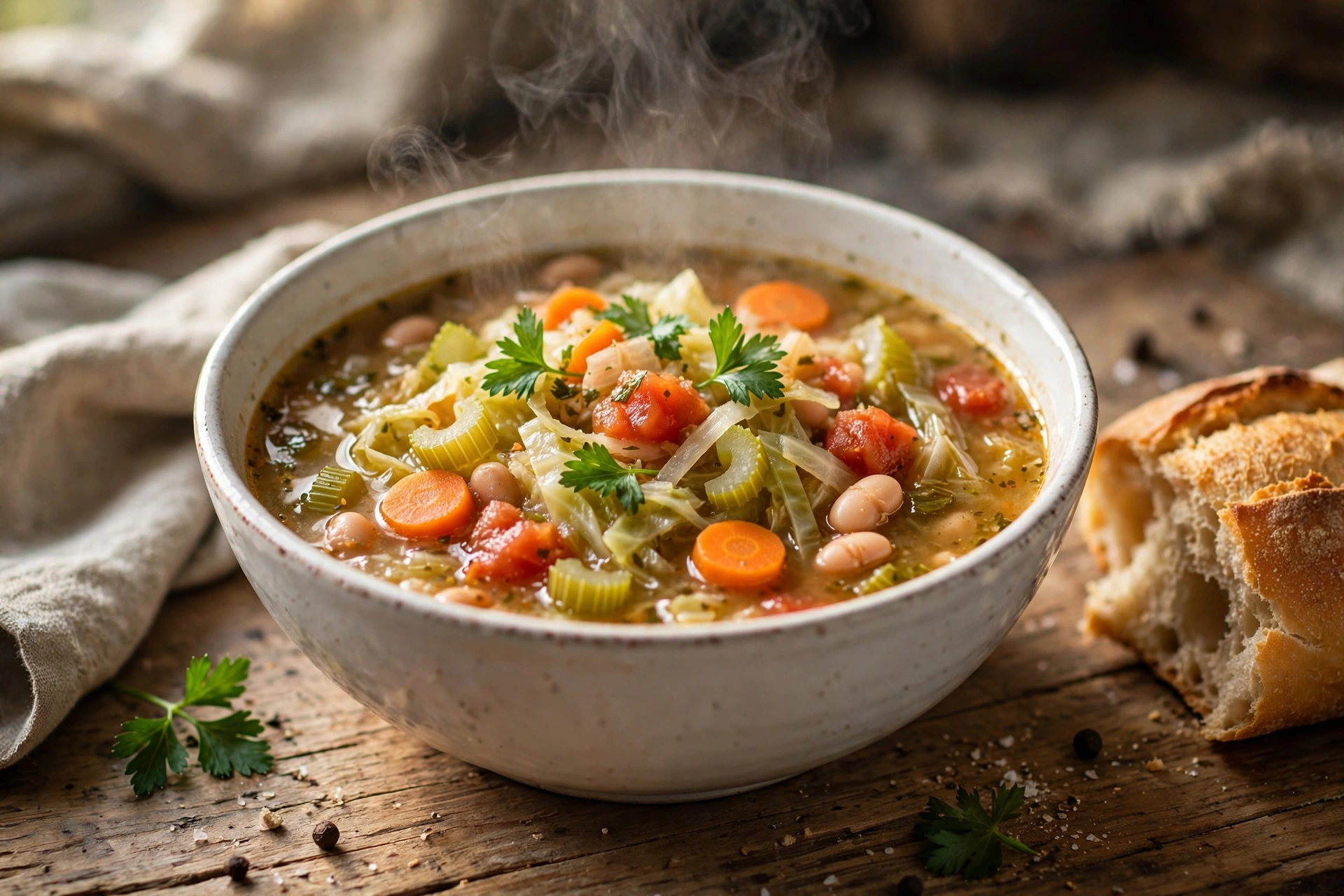
Budget-Friendly Cabbage Soup – Healthy One-Pot Recipe
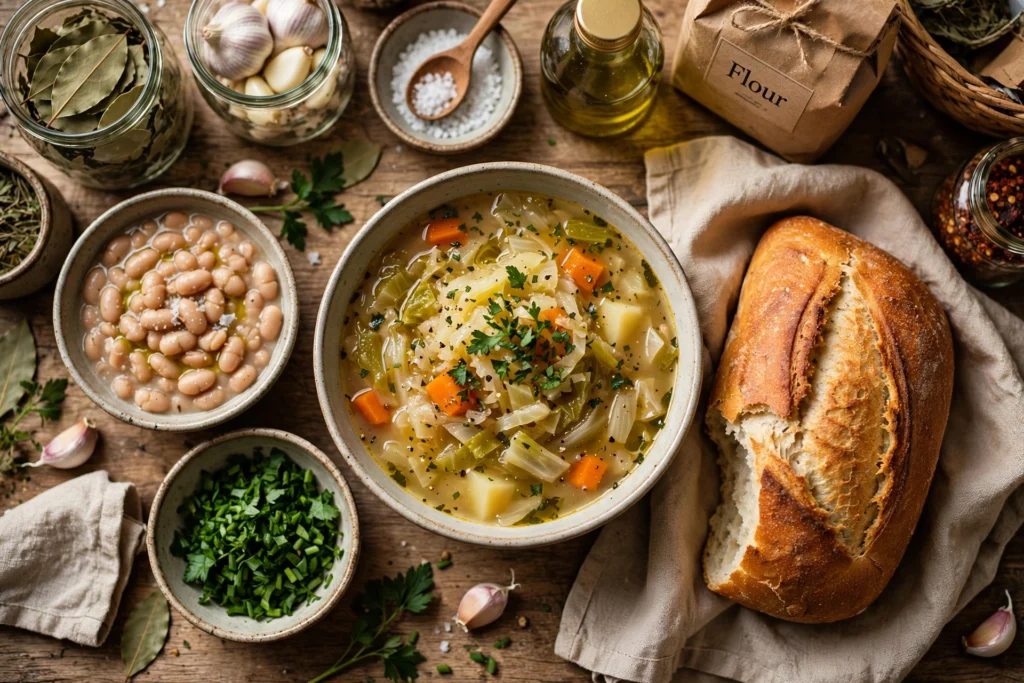
This budget-friendly cabbage soup transforms inexpensive vegetables and pantry staples into a warm, satisfying meal. Tender cabbage, carrots, celery, tomatoes, and white beans simmer in a flavorful broth seasoned with garlic and herbs.
It is easy to adapt, freezes well, and provides plenty of vegetables and fiber without relying on costly ingredients. Serve it with crusty bread, rice, or a baked potato for a more substantial dinner.
By Chef | Dazzling Recipe
- Preparation: 15 minutes
- Cooking: 35 minutes
- Total time: 50 minutes
- Servings: 6
- Course: Soup
- Cuisine: Budget-friendly home cooking
- Diet: Vegetarian and vegan when made with vegetable broth
Why You’ll Love This Cabbage Soup
- Made with inexpensive, widely available ingredients
- Prepared in one pot for easy cleanup
- Naturally packed with vegetables
- White beans add protein, fiber, and substance
- Suitable for meal preparation and freezing
- Flexible enough to use vegetables already in your kitchen
This is a wholesome everyday soup—not a detox treatment or a restrictive “cabbage soup diet.” It works best as part of a varied, balanced way of eating.
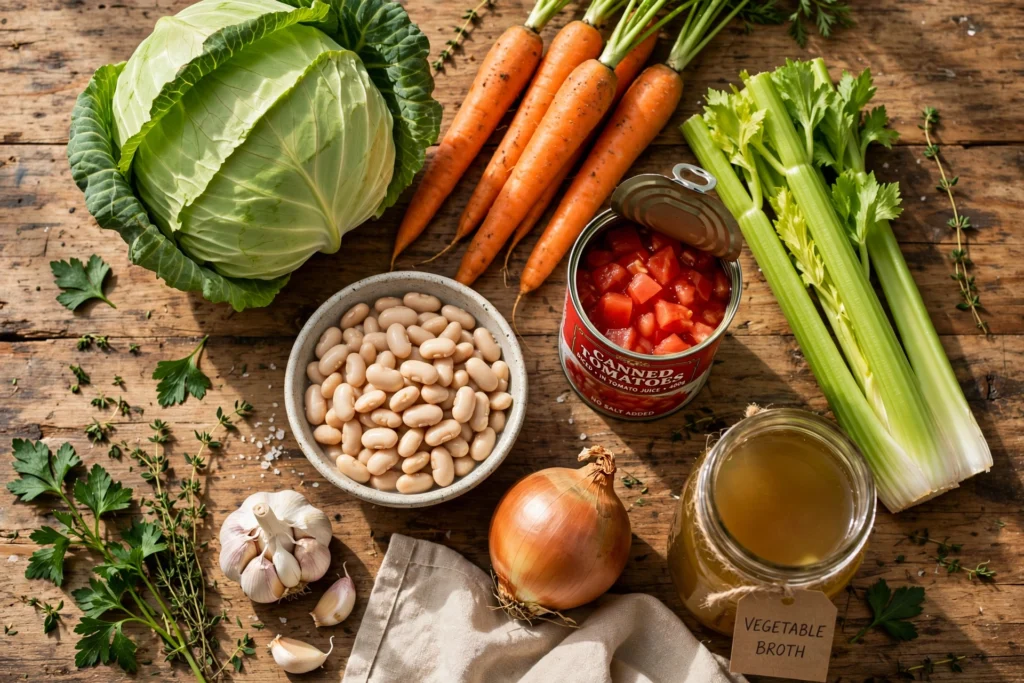
Ingredients
- 2 tablespoons olive oil
- 1 medium yellow onion, diced
- 2 medium carrots, peeled and sliced
- 2 celery ribs, diced
- 3 garlic cloves, minced
- 1 teaspoon dried oregano
- 1 teaspoon smoked or sweet paprika
- ½ teaspoon dried thyme
- ¼ teaspoon red pepper flakes, optional
- 1 small green cabbage, about 1½ pounds or 700 grams
- 1 can diced tomatoes, 14–15 ounces or 400 grams
- 1 can white beans, 15 ounces or 425 grams, drained and rinsed
- 6 cups or 1.4 liters low-sodium vegetable broth
- 1 bay leaf
- ¾ teaspoon salt, plus more to taste
- ¼ teaspoon ground black pepper
- 1 tablespoon lemon juice or red wine vinegar
- Chopped parsley, optional
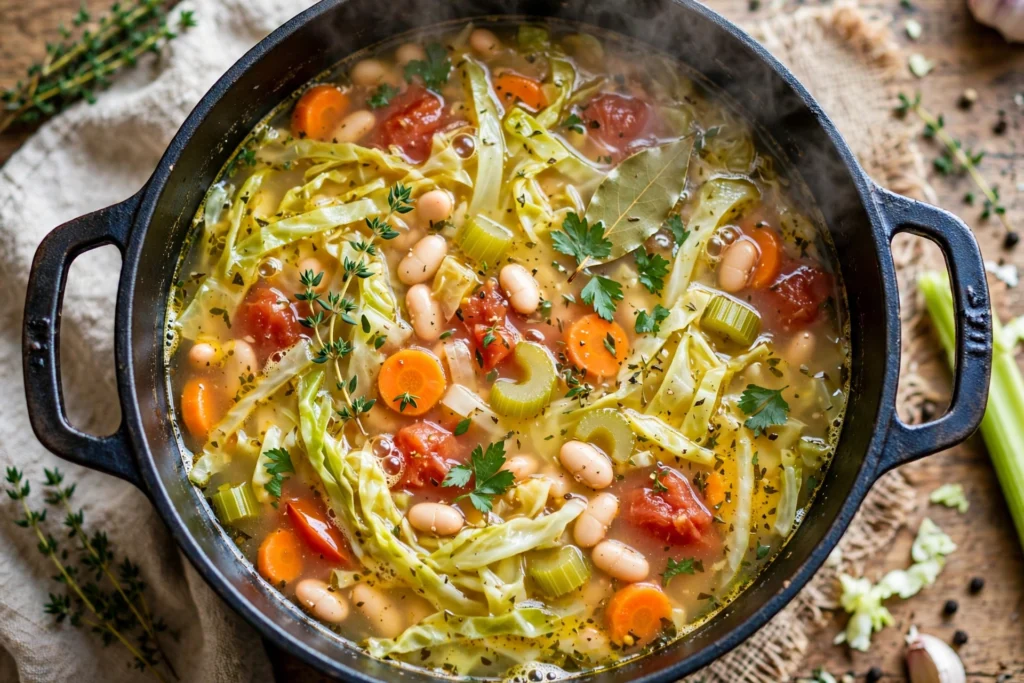
Preparing the Cabbage
Remove any damaged outer leaves. Cut the cabbage into quarters and remove the firm core. Chop the leaves into bite-size pieces.
The cabbage does not need to be shredded finely. Medium pieces retain a pleasant texture while becoming tender during simmering.
Stovetop Instructions
1. Cook the aromatic vegetables
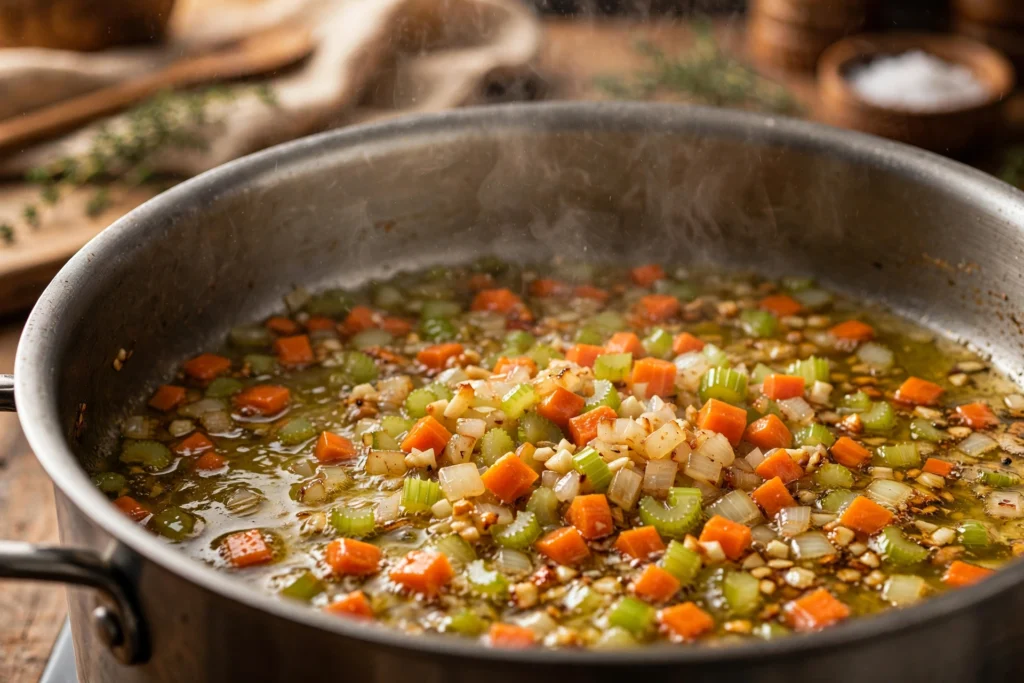
Heat the olive oil in a large soup pot over medium heat. Add the onion, carrots, and celery.
Cook for 6–8 minutes, stirring occasionally, until the onion softens. The vegetables do not need to brown.
2. Add the seasonings
Stir in the garlic, oregano, paprika, thyme, and optional red pepper flakes. Cook for approximately 30 seconds, just until fragrant.
3. Add the cabbage
Add the chopped cabbage in two or three batches, stirring after each addition. It may initially fill most of the pot, but it will quickly soften and reduce in volume.
4. Simmer the soup
Add the diced tomatoes with their juices, drained beans, broth, bay leaf, salt, and black pepper.
Bring the soup to a gentle boil. Reduce the heat, partially cover the pot, and simmer for 25–30 minutes. Stir occasionally and cook until the cabbage and carrots are tender.
5. Finish and serve
Remove the bay leaf. Stir in the lemon juice or vinegar, then taste and adjust the seasoning.
Serve hot with parsley and bread, if desired.
Slow-Cooker Method
For deeper flavor, sauté the onion, carrots, celery, garlic, and seasonings as described above. This step is helpful but optional.
Transfer everything except the beans, lemon juice, and parsley to the slow cooker.
- Cook on low for 6–7 hours, or
- Cook on high for 3–4 hours
Add the drained beans during the final 30 minutes. Finish with lemon juice or vinegar and adjust the seasoning before serving.
How to Make It Even More Affordable
Cabbage is already one of the most economical vegetables, but these ideas can reduce the cost further:
- Use water and bouillon instead of prepared broth.
- Replace olive oil with another neutral cooking oil.
- Use dried beans cooked in advance instead of canned beans.
- Substitute frozen carrots or a frozen vegetable mixture.
- Add leftover vegetables before they spoil.
- Stretch the soup with potatoes, rice, barley, or small pasta.
- Freeze individual portions to prevent leftovers from being wasted.
Avoid cooking rice or pasta directly in the entire batch if you intend to store it for several days. They continue absorbing broth and can become overly soft. Cook them separately and add them to each bowl instead.
Easy Variations
Cabbage and potato soup
Add two peeled, diced potatoes with the broth. Simmer until the potatoes are tender.
Cabbage and lentil soup
Replace the beans with ¾ cup rinsed brown or green lentils. Add approximately one extra cup of broth and simmer until the lentils are cooked.
Italian-inspired cabbage soup
Add one teaspoon of dried basil and serve with grated Parmesan. Use vegetable broth and omit the cheese for a vegan version.
Spicy cabbage soup
Increase the red pepper flakes or add a chopped chili pepper with the onion.
Chicken or turkey cabbage soup
Add two cups of cooked shredded chicken or turkey during the final 10 minutes.
Pantry-only version
Use cabbage, canned tomatoes, beans, broth or bouillon, garlic powder, and dried herbs. Fresh carrots and celery are helpful but not essential.
What to Serve with Cabbage Soup
This soup can be enjoyed by itself as a light meal or paired with:
- Whole-grain or crusty bread
- Grilled cheese
- Cooked rice or barley
- A baked potato
- A simple green salad
- Roasted chicken
- A cheese or vegetable sandwich
For a more filling bowl, add an extra portion of beans or serve the soup over cooked grains.
Storage and Reheating
Allow the soup to cool before transferring it to airtight containers.
- Refrigerator: Store for up to 4 days.
- Freezer: Freeze for up to 3 months.
- Reheating: Warm gently on the stovetop or in the microwave until steaming hot.
The broth may thicken slightly in storage. Add a splash of water or broth while reheating if needed.
Frequently Asked Questions
Which cabbage is best for cabbage soup?
Green cabbage is inexpensive, sturdy, and ideal for this recipe. Savoy cabbage also works and has a softer texture. Red cabbage can be used, but it will change the soup’s color.
How do I prevent an overly strong cabbage smell?
Avoid boiling the soup aggressively or cooking it much longer than necessary. A gentle simmer cooks the cabbage without intensifying its sulfurous aroma.
Are the white beans necessary?
No. The soup can be made without them, but beans make it more filling and contribute protein and fiber. Chickpeas, kidney beans, or cooked lentils are good substitutes.
Why does my soup taste flat?
It may need more salt, acidity, or seasoning. Add salt gradually, then finish with lemon juice or vinegar. A small amount of acidity brightens the tomato broth without making it sour.
Can cabbage soup be frozen?
Yes. Cabbage softens slightly after freezing, but the soup retains good flavor. Freeze it without pasta or rice for the best texture.
Is this a weight-loss or detox soup?
No single soup detoxifies the body or guarantees weight loss. This recipe is simply an affordable vegetable-and-bean meal that can be included in a balanced diet.
Recipe Success Tips
- Cut the vegetables into similar sizes so they cook evenly.
- Use low-sodium broth so you can control the seasoning.
- Do not omit the final lemon juice or vinegar—it balances the broth.
- Add extra broth if you prefer a lighter, more abundant soup.
- Let leftovers rest overnight; the flavors often become even better the following day.